

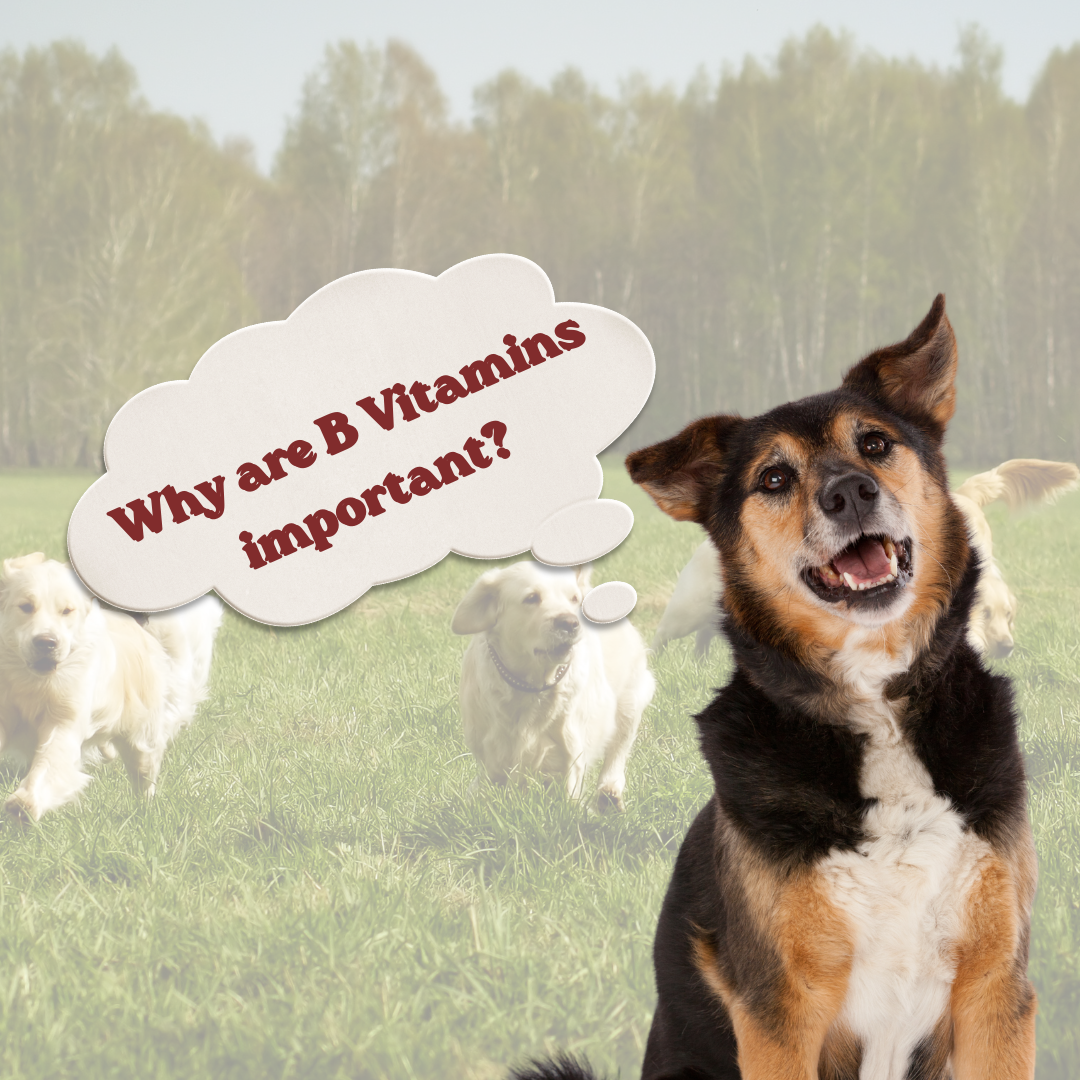
When we think about keeping our dogs healthy, we often focus on the big-ticket items: a quality diet, regular exercise, and routine vet check-ups. But tucked quietly behind the scenes, a family of water-soluble nutrients is doing some of the most important work of all. B vitamins are involved in almost every major biological process in your dog's body, from converting food into energy to keeping the nervous system firing correctly. Yet because dogs cannot store most B vitamins in their tissues, they depend on a daily, reliable supply. Get that supply right and the difference can be remarkable.
What Are B Vitamins, Exactly?
The B vitamin family is often spoken of as a single entity, but it is really a team of specialists, each with its own job to do. Together, they work as co-enzymes, biological helpers that allow the body's chemical reactions to happen quickly and efficiently. Without them, those reactions slow down or stall entirely, with consequences that ripple through every organ system.
Unlike fat-soluble vitamins such as A and D, B vitamins dissolve in water. This means they are not stored in fatty tissue for later use; surplus amounts are simply excreted in urine. The upside is that toxicity is rare. The downside is that your dog needs a consistent intake every single day.
The Six B Vitamins Your Dog Needs Most
Thiamine (B1): The Brain and Energy Starter
Thiamine's primary role is converting carbohydrates into usable energy, a process that begins the moment your dog eats. Beyond energy metabolism, thiamine helps regulate energy and carbohydrate metabolism and activates ion channels in neural tissue.[3] A deficiency in B1 can manifest as neurological symptoms, including loss of coordination and, in severe cases, seizures. Active, working, or highly energetic dogs have a particularly elevated need for thiamine, as it is consumed more rapidly during sustained physical effort.
Riboflavin (B2): Skin, Eyes, and Metabolic Efficiency
Riboflavin sits at the heart of two important co-enzymes (FAD and FMN) that are involved in the metabolism of fats, proteins, and carbohydrates. In plain terms, B2 helps the body extract as much useful energy as possible from food. Its visible effects tend to show up in the skin and eyes; dogs lacking adequate riboflavin often develop dry, flaky skin, eye irritation, and a dull coat. It also supports healthy growth in younger dogs, making it especially important for puppies.
Niacin (B3): Energy, DNA, and Cellular Repair
Niacin plays a dual role: it is required for energy production in every cell of the body, and it assists in the repair of DNA damage. Unlike humans and some other mammals, dogs cannot synthesise niacin from the amino acid tryptophan in meaningful quantities, which means dietary intake is non-negotiable. Deficiency can lead to a condition called black tongue disease, a painful and serious illness characterised by oral inflammation and digestive disturbance.
Pyridoxine (B6): Proteins and Red Blood Cells
Vitamin B6 is arguably the most metabolically active of all the B vitamins, involved in over 100 enzymatic reactions. Its most critical functions relate to protein metabolism, helping the body break down amino acids and use them for muscle repair, immune function, and hormone synthesis. B6 is also responsible for glucose generation, red blood cell and nervous system function, hormone regulation, and immune response.[3] Dogs on high-protein diets have increased B6 requirements, as more protein to process means more B6 consumed in the process.
Folate (B9): Cell Growth and Development
Folate is best known in human health for its role in pregnancy, and the same principle applies to dogs. It is essential for DNA synthesis and cell division, processes that occur continuously in tissues with rapid turnover, such as the gut lining, the immune system, and the skin. In pregnant or lactating bitches, folate requirements rise sharply. Even in non-breeding adults, adequate folate is necessary for healthy red blood cell production and a properly functioning immune response.
Vitamin B12: Nerves, Digestion, and Vitality
Cobalamin, more commonly known as B12, is unique in that it requires a special protein called intrinsic factor, produced in the gut, in order to be absorbed. This makes B12 particularly vulnerable to digestive disorders; dogs with conditions such as inflammatory bowel disease or exocrine pancreatic insufficiency often struggle to absorb adequate B12 regardless of how much is present in their diet.[2] B12 supports the myelin sheath that protects nerve fibres, underpins red blood cell production, and is closely linked to overall energy and vitality.[2] A deficient dog may appear lethargic, lose weight despite eating normally, or show signs of neurological disturbance.
Signs Your Dog May Be Low in B Vitamins
Because B vitamins work across so many systems simultaneously, deficiency can produce a wide and sometimes puzzling range of symptoms. Early research established that dogs receiving a ration supplemented with thiamine, riboflavin, nicotinic acid, pyridoxine, pantothenic acid, and choline could still grow erratically and suboptimally, and that further B vitamin deficiencies could lead to arrested growth, anorexia, and weight loss.[1] This underlines just how critical a complete and well-absorbed B vitamin profile is for canine health. Watch out for:
- Persistent fatigue or low energy despite adequate rest
- Unexplained weight loss
- Dull, dry, or flaking coat and itchy skin
- Loose stools or inconsistent digestion
- Behavioural changes such as increased anxiety or unusual lethargy
- Eye discharge or redness
- Poor muscle tone or reduced exercise tolerance
These signs can have many causes, so always consult your vet if you are concerned. It is also worth noting that B12 deficiency symptoms can be compounded by the underlying gut conditions that cause them — once a digestive disorder disrupts absorption, the resulting deficiency can perpetuate those same symptoms even after the initial illness is treated.[2] Supporting your dog's B vitamin intake alongside gut health is therefore a sensible approach to overall wellbeing.
The Gut Connection: Why Absorption Matters as Much as Intake
Here is something that often goes overlooked: it is not simply about how much of a nutrient your dog consumes, but how much is actually absorbed and put to use. A dog with poor gut health, characterised by an imbalanced microbiome, excess gas, loose stools, or chronic inflammation, may struggle to absorb B vitamins effectively even when the diet appears perfectly balanced on paper.
This is why gut health and nutritional sufficiency are inseparable. An inflamed or dysfunctional gut lining cannot absorb nutrients properly. Harmful bacteria, when present in excess, can consume or degrade some vitamins before the body ever gets to use them. Conversely, a healthy, balanced microbiome actively supports the production and absorption of certain B vitamins, including folate and B12.
How CaniNectar Supports B Vitamin Intake
This is where CaniNectar comes in. Made from malted barley using ancient, artisan barley varieties that have been valued across Europe for over 800 years for their naturally high enzyme content, CaniNectar is produced via a patented process specifically designed to preserve the integrity of those beneficial compounds.
Each dose of CaniNectar delivers a naturally occurring spectrum of essential B vitamins:
- Thiamine (B1) for energy metabolism and brain function
- Riboflavin (B2) for healthy skin, eyes, and efficient metabolism
- Niacin (B3) for energy production and cellular repair
- Pyridoxine (B6) for protein processing and red blood cell formation
- Folate (B9) for cell growth and immune support
- Vitamin B12 for nerve health and overall vitality
Crucially, CaniNectar is not simply a vitamin supplement. It also delivers a rich blend of naturally occurring digestive enzymes, including Protease, Lipase, Amylase, Cellulase, and Phytase, that help your dog break down food more efficiently and absorb nutrients more completely. These enzymes work hand in hand with the B vitamins: better digestion means better absorption, which means those B vitamins are actually reaching the cells and systems that need them.
CaniNectar also contains powerful antioxidants such as Ferulic Acid and Flavan-3-ols, as well as key minerals including Magnesium, Zinc, Selenium, and Iron, all of which complement the action of the B vitamins and support your dog's overall wellbeing from the inside out.
The result is a product that addresses one of the root causes of nutritional insufficiency - poor gut function - rather than simply topping up nutrient levels on paper. A dog whose gut is working well is a dog who actually benefits from the nutrients it consumes.

A Simple Step With a Meaningful Impact
Good nutrition is the foundation of a long, healthy, and happy life for your dog. B vitamins are not a luxury or an optional extra, they are fundamental to energy, nerve function, digestion, immunity, skin health, and behaviour. The challenge is ensuring your dog gets enough of them, in a form that can actually be absorbed and used.
CaniNectar offers a natural, science-backed way to support both. By combining a genuine source of B vitamins with digestive enzymes that improve gut function and nutrient uptake, it addresses the whole picture rather than just part of it.
A healthier gut. Better absorption. More energy, better coats, calmer behaviour, and stronger immunity. That is what B vitamins can do, and that is what CaniNectar is designed to help deliver.
References
- Schaefer, A. E., McKibbin, J. M., & Elvehjem, C. A. (1942). Studies on the vitamin B complex in the nutrition of the dog. The Journal of Nutrition, 23(5), 491–500. https://doi.org/10.1093/jn/23.5.491
- Coates, J. (2025, June 30). Vitamin B12 for dogs. PetMD. https://www.petmd.com/dog/food-and-diet/vitamin-b12-for-dogs
- Burke, A. (2026, February 23). 7 vitamins your dog needs for a healthy life. American Kennel Club. https://www.akc.org/expert-advice/nutrition/vitamins-dogs-need-healthy-lifestyle/
Share:
We Obsess Over Dog Food Labels...But What About Everything Else in the House?
Why Does My Dog Smell? The Surprising Gut Health Connection to Yeasty Coats