

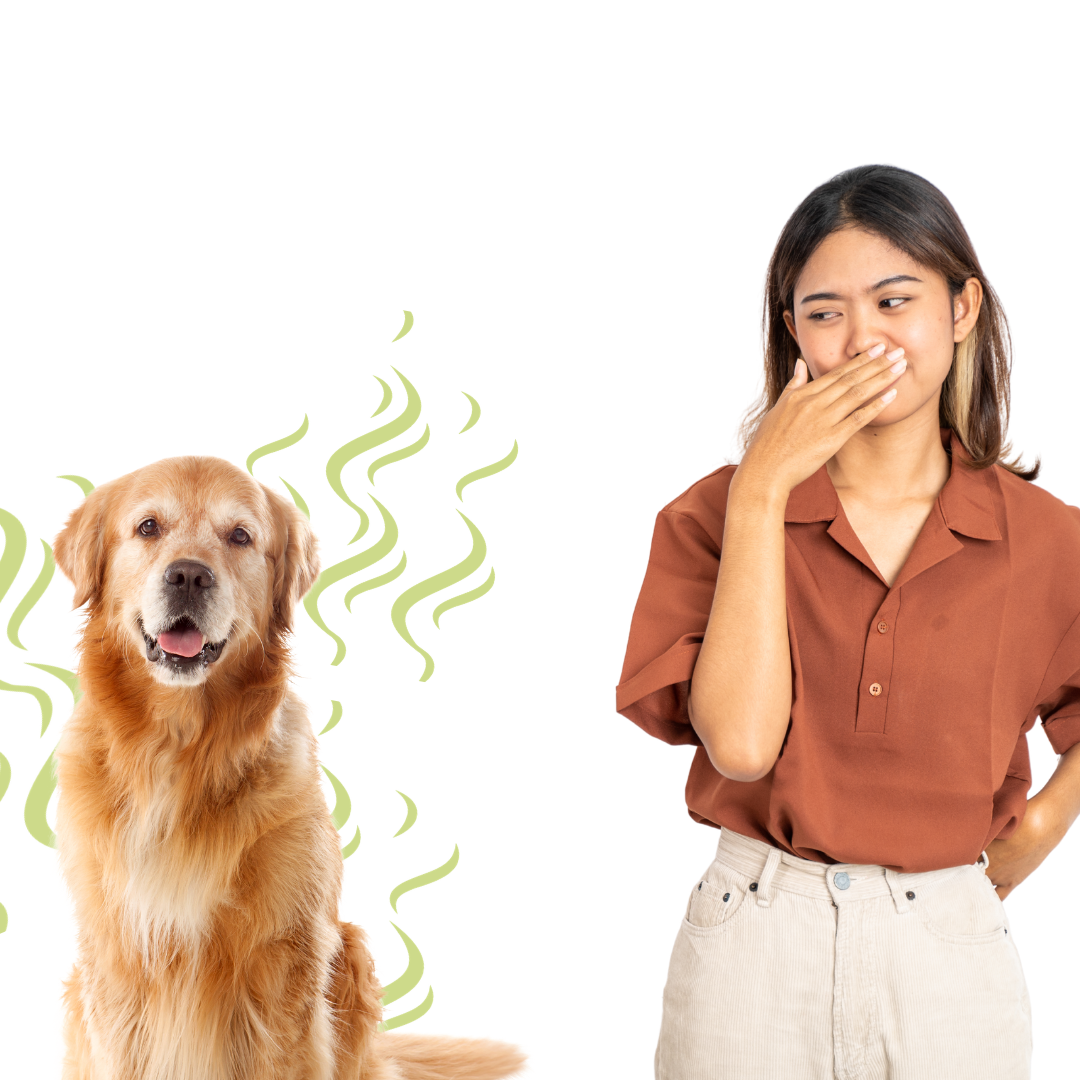
Every dog owner knows the smell. It's not quite the good "just been for a walk" smell, it's muskier, a bit yeasty, sometimes almost cheesy, and it tends to cling to paws, ears, armpits and skin folds no matter how often you bathe your dog. Many of us shrug it off as "just a doggy thing." But a persistent, musty odour is very often a genuine clinical sign, and increasingly, vets and researchers are looking past the skin itself and into the gut to explain where it's coming from.
Yeast Is Usually the First Suspect
The most common culprit behind a strong, musty dog odour is an overgrowth of a yeast called Malassezia pachydermatis. This organism lives on healthy dog skin in small numbers all the time; it's part of the normal microbial community (1). Problems start when something upsets the balance and the yeast multiplies out of control, a condition called Malassezia dermatitis, or yeast dermatitis (2).
The telltale signs go well beyond smell. Vets look for greasy, flaky or waxy skin, redness, itching, thickened "elephant skin," dark staining around the nail beds, and recurring ear infections (1)(2). Certain breeds, including West Highland White Terriers, Basset Hounds, Cocker Spaniels, Poodles, Shih Tzus and Dachshunds, seem to be more prone to it, which suggests a genetic as well as environmental element (1)(2).
Crucially, yeast dermatitis is almost never a stand alone problem. It's usually secondary to something else that's disrupted the skin's normal defences, such as allergic skin disease, recurring bacterial infections, hormonal conditions like hypothyroidism, excess skin oiliness, or long courses of antibiotics or steroids (1)(2). Diagnosing it properly requires a vet to examine a skin sample under the microscope, because how much yeast is "too much" varies a great deal between individual dogs and even between breeds (1). This is worth stressing: a smelly, itchy dog should always be seen by a vet before you assume you know the cause, since lesion patterns and odour alone aren't reliable enough for a diagnosis (1).
Why the Gut Keeps Coming Up
What's newer, and genuinely interesting, is how much of this seems to trace back to the gut rather than starting on the skin at all. Researchers now talk about a "gut skin axis," a two way communication line between the gut microbiome and the skin's immune system (3)(4).
A comprehensive 2025 review of the canine gut microbiome pulled together several studies on this exact link. In dogs with atopic dermatitis, researchers found a marked drop in beneficial bacteria such as Prevotella and Fusobacterium, alongside an increase in more troublesome genera like Escherichia and Shigella, compared with healthy dogs (4). One study cited in the review found that in healthy dogs, Fusobacterium made up over 20% of the gut community, but in dogs with atopic dermatitis this fell to a tiny fraction of a percent, a huge shift (4). The reasoning is that when the gut's beneficial bacteria decline, inflammatory signalling increases throughout the body, including in the skin, weakening its barrier function and making it easier for opportunistic organisms like Malassezia to take hold (3)(4).
There's also a "leaky gut" angle. When the gut lining becomes more permeable than it should be, often due to bacterial imbalance, chronic inflammation, or poor diet, bacterial fragments and toxins can pass into the bloodstream and trigger inflammatory responses well beyond the digestive tract, including in the skin (5)(6). This is thought to be one reason dogs with ongoing digestive issues often seem to have skin and coat problems too, and vice versa.
None of this means yeast dermatitis is "actually" a gut problem in disguise. Allergies, hormones and previous infections still matter enormously, and proper veterinary diagnosis and antifungal treatment (topical shampoos, and in more severe or generalised cases, oral antifungals such as ketoconazole or itraconazole) remain the established route to clearing an active infection (1)(2). But supporting gut balance alongside that treatment, or as a preventative measure for dogs prone to recurrence, is a reasonable and increasingly well evidenced idea.
Where CaniNectar Fits In
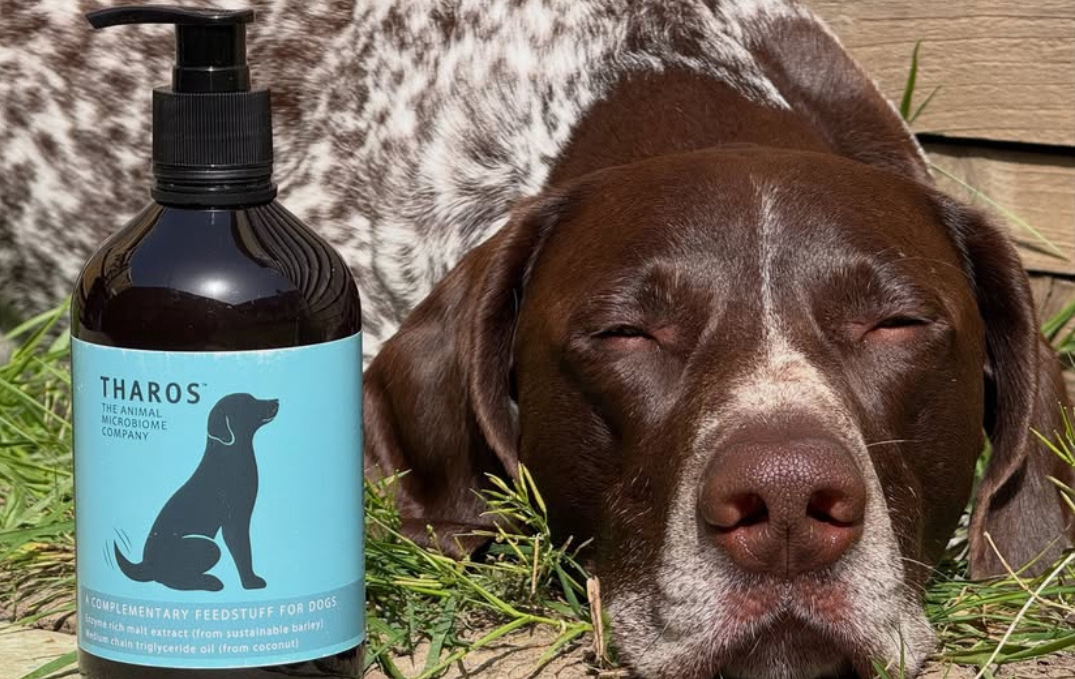
This is exactly the gap CaniNectar was formulated to close: supporting the gut itself, rather than just treating the skin after the fact. CaniNectar is a liquid, enzyme rich malt extract, not a probiotic (no foreign bacteria added) and not a simple prebiotic, but what's now being called an "anabiomic," an approach that gives a dog's own beneficial bacteria the right conditions to thrive. Its enzymes help break down proteins, fats and complex carbohydrates in the small intestine, so less undigested material reaches the colon to ferment into the wrong things, and more of the right material reaches and feeds the bacteria that keep the gut, and the skin, in balance.
The results back this up. Across four independent studies totalling 259 dogs, CaniNectar has been linked to a 73.5% rise in butyric acid, a 64.8% rise in propionic acid, and a 44.8% rise in acetic acid, the short chain fatty acids that repair the gut lining, calm inflammation and feed the gut brain axis. In an independent Blue Cross trial of rescue dogs, 29.2% showed clinically significant skin improvement within four weeks, alongside firmer stools in 80% of dogs and a third less noise reactivity. Coat changes were often the first thing owners noticed, several reported visibly shinier, softer coats within days of starting supplementation. Across every study, at every timepoint from four weeks out to two years, there were zero serious adverse events.
For a dog dealing with recurrent musty odour, itching or dull coat, CaniNectar offers a way to work on the root cause, a balanced gut, alongside whatever your vet prescribes for the skin itself.

The Sensible Approach
If your dog has developed a persistent musty or yeasty smell, it's always worth a vet visit first, so they can confirm whether Malassezia or bacteria are involved and rule out any underlying allergy or hormonal trigger. But once that's in hand, supporting the gut is one of the most useful things you can do for your dog's skin, coat and overall comfort long term, and CaniNectar makes that simple to build into daily feeding. The smell is rarely "just" a skin problem. Increasingly, the evidence says the gut deserves just as much attention.
References
- Bajwa, J. (2017). Canine Malassezia dermatitis. The Canadian Veterinary Journal, 58(10), 1119 to 1121. https://pmc.ncbi.nlm.nih.gov/articles/PMC5603939/
- VCA Animal Hospitals. (2022). Yeast dermatitis in dogs (K. Williams, T. Hunter, & E. Ward, Authors). Retrieved July 14, 2026. https://vcahospitals.com/know-your-pet/yeast-dermatitis-in-dogs
- Marchegiani, A., Fruganti, A., Spaterna, A., Dalle Vedove, E., Bachetti, B., Massimini, M., Di Pierro, F., Gavazza, A., & Cerquetella, M. (2020). Impact of nutritional supplementation on canine dermatological disorders. Veterinary Sciences, 7(2), 38. https://www.mdpi.com/2306-7381/7/2/38
- Kim, H., Chae, Y., Cho, J. H., Song, M., Kwak, J., Doo, H., Choi, Y., Kang, J., Yang, H., Lee, S., Keum, G. B., Wattanaphansak, S., Kim, S., & Kim, H. B. (2025). Understanding the diversity and roles of the canine gut microbiome. Journal of Animal Science and Biotechnology, 16, 95. https://link.springer.com/article/10.1186/s40104-025-01235-4
- VCA Animal Hospitals. (2024). Leaky gut syndrome in dogs (M. Weir & C. Barnette, Authors). Retrieved July 14, 2026. https://vcahospitals.com/know-your-pet/leaky-gut-syndrome-in-dogs
- Affinity Petcare. (n.d.). Skin problems in dogs and the intestinal microbiota (J. Campmany, Author). Retrieved July 14, 2026. https://vetsandclinics.com/en/library/skin-problems-in-dogs-and-the-intestinal-microbiota


Share:
The Gut-Skin Connection: Why a Healthy Tummy Means a Healthier Coat
The Great Dog Walk Disaster: When Diarrhoea Strikes Mid-Stroll