

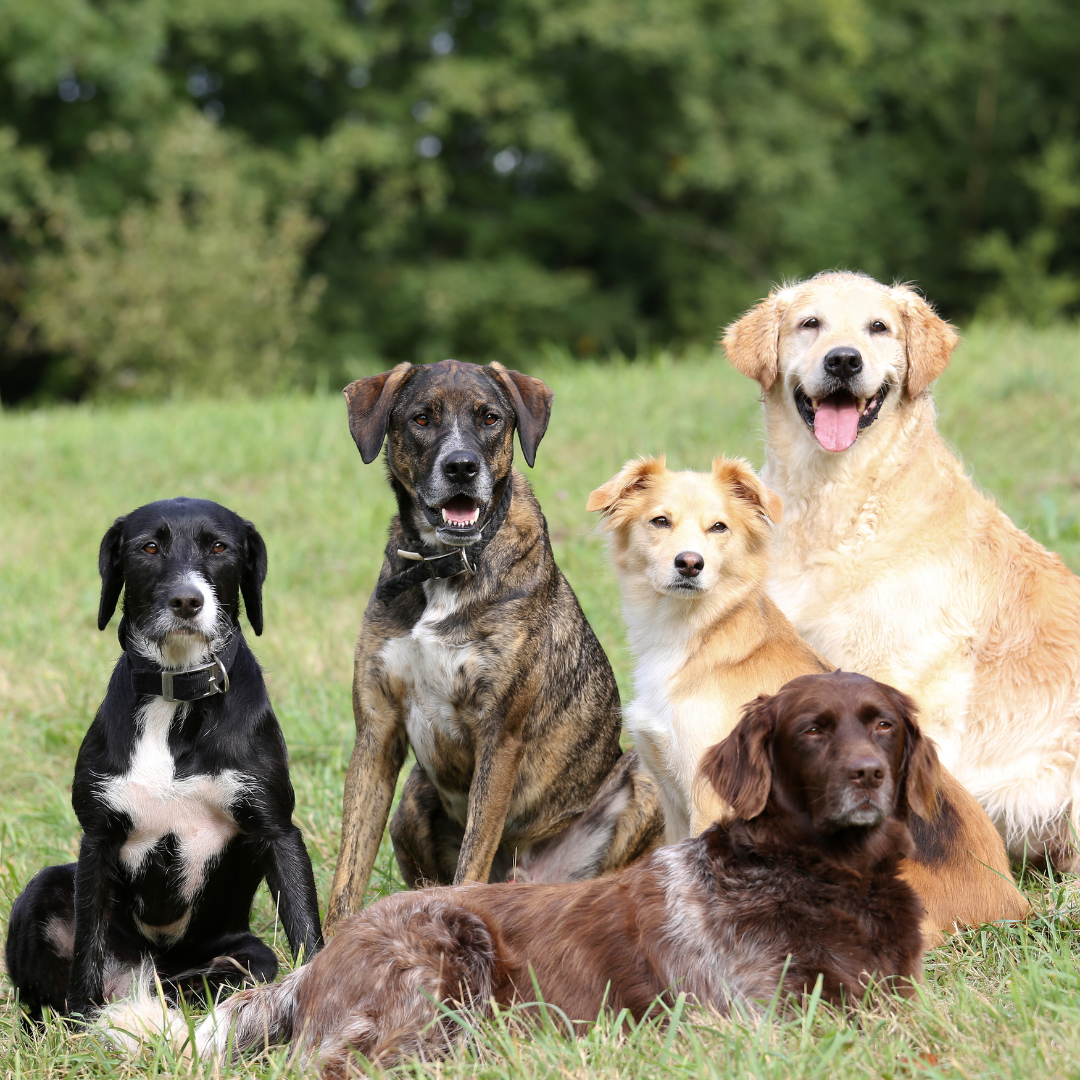
When it comes to our dogs' health, we tend to focus on what we can see, a dull coat, low energy, or a change in mood. But the root cause of many of these problems often lies somewhere far less visible: the gut. Digestive health is central to almost everything that keeps a dog thriving, and for certain breeds, it's a particularly important area to monitor.
For practical guidance beyond breed-specific risks, read our guide to dog gut health, digestion and the microbiome.
So which dogs are most at risk, why does it matter, and what can owners do to support their pet's digestive wellbeing?
To understand the background to these breed-related differences, explore how your dog digests food, from the stomach and small intestine to the gut microbiome.
The Breeds Most Likely to Struggle
Not all dogs are created equal when it comes to digestive resilience. Genetics, anatomy, and breed-specific quirks mean that some dogs are significantly more prone to gut problems than others.
- Great Danes and other deep-chested breeds top the list when it comes to serious digestive risk.[1] Their body shape makes them highly susceptible to gastric dilatation-volvulus (GDV), more commonly known as bloat — a life-threatening condition in which the stomach fills with gas and twists on itself. Weimaraners, Doberman Pinschers, Standard Poodles, and Irish Setters share this anatomical vulnerability[1] and require particular care around mealtimes, exercise, and feeding habits.
- German Shepherds are perhaps the most well-documented breed when it comes to digestive disorders. They are disproportionately affected by exocrine pancreatic insufficiency (EPI), a condition in which the pancreas fails to produce enough digestive enzymes, leaving the dog unable to properly absorb nutrients from food.[2] They also show elevated rates of inflammatory bowel disease (IBD) and small intestinal bacterial overgrowth.[3] In short, the German Shepherd's gut is a busy source of veterinary concern.
- Boxers have their own breed-specific gut condition: histiocytic ulcerative colitis, a chronic inflammatory condition of the large intestine that causes persistent bloody diarrhoea and weight loss.[4] It's rare in most breeds but significantly overrepresented in Boxers, and can require long-term management.
- Irish Setters are also notable for a condition strikingly similar to coeliac disease in humans, a gluten-sensitive enteropathy that causes damage to the gut lining when the dog consumes wheat.[5][6] This is one of the better-understood breed-specific digestive sensitivities and highlights just how much diet can interact with genetics.
- Miniature Schnauzers are prone to hyperlipidaemia (elevated blood fats)[7] and pancreatitis,[8] particularly when fed a high-fat diet. Pancreatitis causes significant digestive disruption and can become a recurring issue if dietary management isn't maintained.
- French Bulldogs and English Bulldogs, with their brachycephalic (flat-faced) anatomy, tend to swallow excess air when eating, which contributes to bloating and flatulence.[9] Their popularity as a breed has unfortunately come alongside a rise in gut-related complaints.
Smaller breeds like Yorkshire Terriers, Shih Tzus, and Chihuahuas also frequently present with what vets describe as sensitive digestion (looser stools, frequent upset, and variable appetite) though this tends to be less precisely defined than the breed-specific diseases above.
Why Gut Health Matters Beyond the Digestive System
It's tempting to think of gut issues as simply a matter of loose stools or the occasional bout of vomiting. But the gut is far more than a passage for food. It is central to immune function, with around 70 per cent of a dog's immune system[10] residing in the gut-associated lymphoid tissue. An imbalanced gut microbiome doesn't just cause digestive symptoms. It can compromise immunity, affect skin and coat health, and even influence behaviour.
This last point, the gut-brain connection, has attracted growing interest in veterinary science. The gut produces neurotransmitters and communicates directly with the brain via the vagus nerve. Dogs with a disrupted microbiome can show increased anxiety, restlessness, and difficulty with training and focus.[11] A calm, well-balanced gut may genuinely contribute to a calmer, more settled dog.
Recognising the Signs
Digestive distress doesn't always announce itself loudly. Some signs to watch for include:
- Frequent loose or poorly formed stools
- Excessive flatulence or bloating
- Gurgling sounds from the abdomen
- Reduced appetite or interest in food
- Weight loss despite eating normally
- Dull, dry, or flaky coat
- Increased anxiety, reactivity, or difficulty settling
If your dog is showing several of these symptoms consistently, it's worth a conversation with your vet to rule out underlying conditions, particularly if your dog is one of the breeds mentioned above.

Supporting Gut Health: Where CaniNectar Comes In
Once serious medical conditions have been ruled out or managed, many owners find that targeted nutritional support makes a meaningful difference to their dog's day-to-day digestive health. This is where products like CaniNectar can play a valuable role.
CaniNectar is made from malted barley, using ancient artisan barley varieties that have been cultivated in Europe for over 800 years, and produced via a patented process that preserves their naturally occurring enzymes. These enzymes are key to what makes CaniNectar different from standard supplements.
Dogs often struggle to efficiently break down and absorb nutrients from their food. CaniNectar provides a range of digestive enzymes including protease (for protein breakdown), lipase (for fats), amylase (for starches), and fructanase, cellulase, and xylanase for plant-based fibres. This enzymatic support helps food be digested more completely, reducing the undigested matter that otherwise ferments in the gut and produces gas.
For breeds prone to flatulence and bloating, this reduction in fermentation can make a noticeable difference to comfort. For German Shepherds or dogs with a history of inconsistent stools, improved digestion translates directly to firmer, more predictable output and better nutrient absorption.
CaniNectar also contains B vitamins (B1 through B12), which support energy metabolism and nerve function, as well as key minerals — magnesium, potassium, selenium, zinc, and iron — that underpin immune health, muscle function, and cellular repair. Its antioxidant compounds, including ferulic acid and flavan-3-ols from the barley malt, help protect gut cells from oxidative stress and support a balanced inflammatory response.
Taken together, these components work to support a healthier gut microbiome, which in turn benefits the whole dog - from more comfortable digestion and improved stools, to better skin and coat condition, and even a calmer disposition through the gut-brain axis.
Your next step
Everyday digestive support, alongside their normal food.
Breed-related risks are worth understanding. For the everyday feeding routine, CaniNectar is a complementary feed containing Enzyme Rich Malt Extract, designed to support normal digestion in healthy dogs.
Explore the ingredients, feeding guide and available bottle sizes, or read the research before deciding.
CaniNectar does not replace veterinary care or prescribed pancreatic enzymes. If your dog has a diagnosed condition or ongoing symptoms, ask your vet before introducing a supplement.
A Final Word
Digestive health isn't a niche concern, it's foundational to everything from your dog's energy levels to their emotional wellbeing. If you have a breed that's known to struggle in this area, being proactive rather than reactive is always the better approach. Good diet, sensible feeding routines, regular veterinary check-ups, and targeted nutritional support like CaniNectar all play a part in keeping your dog's gut in the best possible shape. Because a happy gut really does mean a happier dog.
References
- The Vale Veterinary Group. (2025, May 18). Bloat in dogs: A deadly condition every pet owner should know about. https://valeveterinarygroup.co.uk/bloat-in-dogs-a-deadly-condition-every-pet-owner-should-know-about/
- Animal Clinic of Glasgow. (n.d.). German Shepherd. Animal Clinic of Glasgow. Retrieved June 29, 2026, from https://glasgowvetclinic.com/client-resources/breed-info/german-shepherd-dog/
- Peiravan, A., Bertolini, F., Rothschild, M. F., Simpson, K. W., Jergens, A. E., Allenspach, K., & Werling, D. (2018). Genome-wide association studies of inflammatory bowel disease in German shepherd dogs. PloS one, 13(7), e0200685. https://doi.org/10.1371/journal.pone.0200685
- German, A. J., Hall, E. J., Kelly, D. F., Watson, A. D., & Day, M. J. (2000). An immunohistochemical study of histiocytic ulcerative colitis in boxer dogs. Journal of comparative pathology, 122(2-3), 163–175. https://doi.org/10.1053/jcpa.1999.0353
- Saleh, S. F. M., Othman, N., Hassan, S. M. A., Saeed, A. K., & Saeed, N. M. (2022). Pathogenesis of gluten-sensitive enteropathy in dog. In R. Z. Abbas, A. Khan, P. Liu, & M. K. Saleemi (Eds.), Animal health perspectives (Vol. 2, pp. 165–172). Unique Scientific Publishers. https://doi.org/10.47278/book.ahp/2022.56
- Biagi, F., Maimaris, S., Vecchiato, C. G., Costetti, M., & Biagi, G. (2020). Gluten-sensitive enteropathy of the Irish Setter and similarities with human celiac disease. Minerva gastroenterologica e dietologica, 66(2), 151–156. https://doi.org/10.23736/S1121-421X.19.02648-5
- Mori, N., Lee, P., Muranaka, S., Sagara, F., Takemitsu, H., Nishiyama, Y., Yamamoto, I., Yagishita, M., & Arai, T. (2010). Predisposition for primary hyperlipidemia in Miniature Schnauzers and Shetland sheepdogs as compared to other canine breeds. Research in veterinary science, 88(3), 394–399. https://doi.org/10.1016/j.rvsc.2009.12.003
- Universities Federation for Animal Welfare. (2011). Pancreatitis and hyperlipidaemia in Miniature Schnauzers. Science for Animal Welfare. https://scienceforanimalwelfare.org/species/dog/miniature-schnauzer/pancreatitis-and-hyperlipidaemia/
- Grobman, M., Reinero, C., Lee-Fowler, T., & Lever, T. E. (2024). Incidence and characterization of aerophagia in dogs using videofluoroscopic swallow studies. Journal of veterinary internal medicine, 38(3), 1449–1457. https://doi.org/10.1111/jvim.17054
- Union Lake Veterinary Hospital. (2023, January 4). Your pet's immune system and gut health. https://unionlakeveterinaryhospital.com/blog/your-pets-immune-system-and-gut-health
- Sacoor, C., Marugg, J. D., Lima, N. R., Empadinhas, N., & Montezinho, L. (2024). Gut-Brain Axis Impact on Canine Anxiety Disorders: New Challenges for Behavioral Veterinary Medicine. Veterinary medicine international, 2024, 2856759. https://doi.org/10.1155/2024/2856759


Share:
From Gut to Grin: Why Your Dog's Breath Starts in Their Belly
The Natural Dog by Gwen Bailey: Lessons on Canine Gut Health