

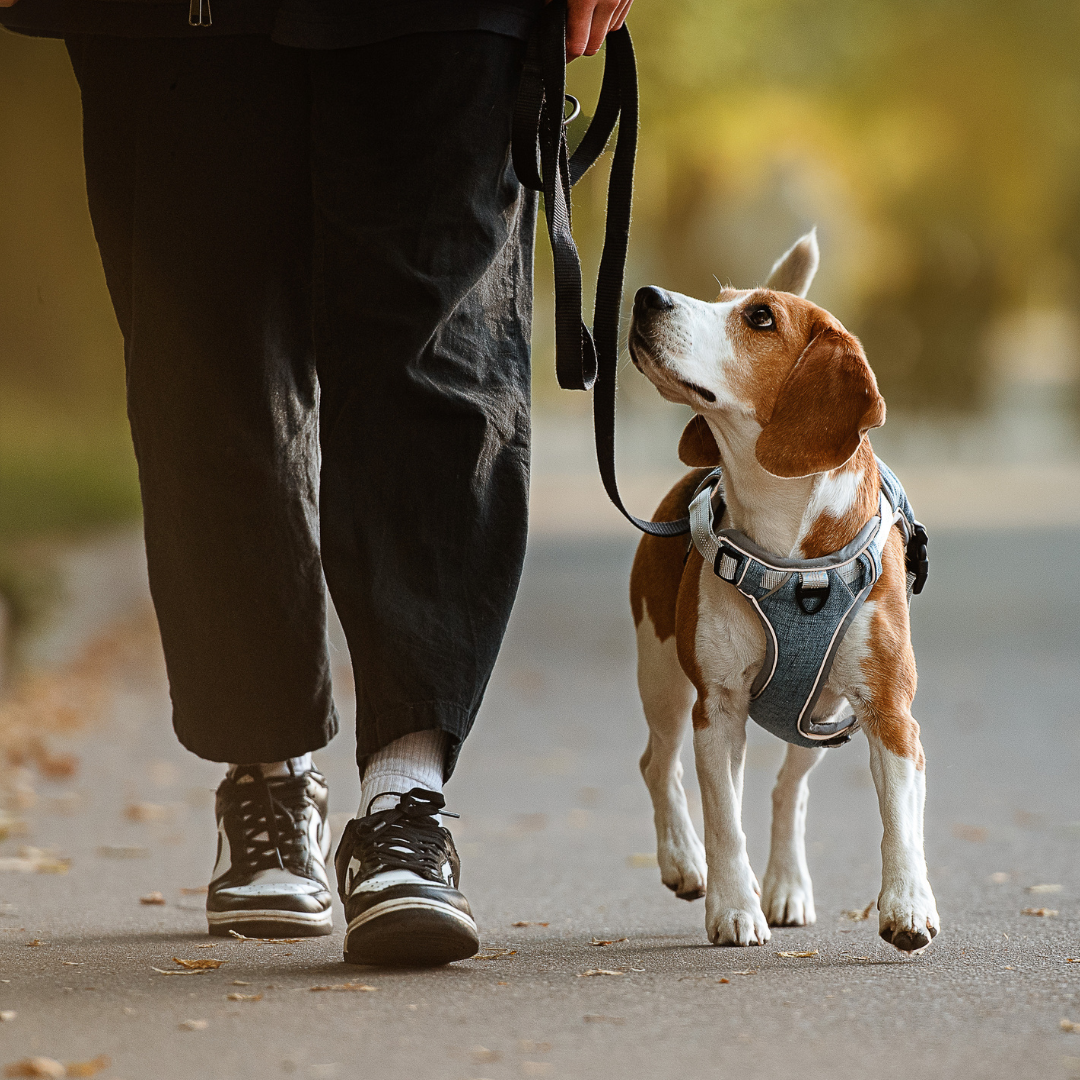
There's a particular kind of dread that only dog owners understand. You're halfway round the park, the sun's out, your dog is trotting along happily sniffing every lamppost in sight, and then it happens. That unmistakable pause. The hunching. The look on your dog's face that says "something's not right." And within seconds, you're standing there with a poo bag that is nowhere near up to the job, surrounded by other dog walkers politely pretending not to notice.
If you've been there, you're not alone. Canine diarrhoea during walks is one of the most common, and most mortifying, problems dog owners deal with. Let's talk about why it happens, why it's such a headache, and what you can actually do about it.
Why Does This Always Happen at the Worst Possible Moment?
There's a reason it never seems to happen conveniently at home, five minutes before you're due to leave. Exercise gets the digestive system moving. Movement increases blood flow to the gut and stimulates intestinal contractions, which is exactly why so many dogs seem to "need to go" the moment the lead comes out. If your dog's gut is already a bit off balance - whether from a change in food, stress, a dodgy bit of something they shouldn't have eaten, or an underlying imbalance in their gut bacteria - a walk can be the tipping point that turns a slightly loose stool into a full-blown emergency.
And it's not just uncomfortable for you. Think about it from your dog's point of view. Diarrhoea is often accompanied by cramping, urgency, and genuine distress. Dogs can't tell you their stomach hurts, but you'll often see it in their behaviour: reluctance to walk further, repeated squatting, whining, or that hangdog look that makes your heart sink a little.
The Ripple Effect on Your Daily Life
It's easy to underestimate just how disruptive this problem is until you're living with it. A dog with an unpredictable gut changes the whole rhythm of your day:
Walks become stressful instead of enjoyable. Instead of looking forward to your daily walk, you're scanning ahead for grass verges, dreading busy paths, and mentally calculating how far you are from home at all times.
You start avoiding certain places. Long countryside walks, visits to friends with gardens, trips to the beach (anywhere without easy access to a "safe zone") can start to feel too risky.
The clean-up is a lot more than a poo bag can handle. Loose, watery stools are messier, harder to pick up fully, and more likely to end up on paws, fur, and ,let's be honest, sometimes on you.
It affects your dog's confidence too. Dogs are sensitive to routine and to your reactions. A dog who's had a few embarrassing or uncomfortable accidents on walks can become anxious about the walk itself, hanging back or wanting to turn home early.
It's exhausting to manage. Between the extra washing, the vet visits to rule out anything serious, and the general low hum of anxiety every time you clip the lead on, digestive issues take a real toll on dog owners, not just dogs.
It's Rarely About One Single Thing
Diarrhoea in dogs is what vets call a symptom rather than a diagnosis, it can be triggered by all sorts of things: a change in diet, scavenging on a walk, stress, parasites, or simply an underlying imbalance in the gut microbiome. That last one is worth focusing on, because it's often the root cause hiding behind repeated, low-grade digestive upset that doesn't have an obvious trigger.
Your dog's gut is home to trillions of bacteria, and when that ecosystem is in balance, digestion tends to run smoothly, firm stools, minimal gas, and a settled tummy. When it's out of balance, even small stressors (like the physical activity of a walk) can be enough to trigger loose stools, urgency, and discomfort.
This is where a lot of owners feel stuck. You can control what your dog eats to a point, but you can't always control what they hoover up off the pavement, and you certainly can't reason with a dog about why they shouldn't eat that suspicious thing in the hedge. What you can do is support the gut itself, so it's more resilient when these little challenges come along.

How CaniNectar Fits Into the Picture
This is exactly the gap CaniNectar is designed to help with. Rather than masking symptoms after the fact, it works on supporting the gut from the inside, so digestion is more robust in the first place.
CaniNectar is made from malted barley, using traditional artisan barley varieties prized for centuries for their naturally high enzyme content, produced through a patented process that preserves those enzymes intact. Each drop delivers a combination of digestive enzymes ,including protease, lipase, and amylase, that help your dog break down and absorb nutrients from their food more efficiently, rather than leaving undigested material to ferment in the gut, which is a common contributor to loose stools and gas.
This isn't just a nice theory, either. CaniNectar's evidence base now spans four independent studies covering 259 dogs and involving 63 animal health professionals, and stool quality is one of the areas where the results are clearest.
In an independent clinical trial in 2025, 25 rescue dogs were monitored over four weeks. The proportion of dogs with ideal stool consistency rose from 41.7% at the start of the trial to 80% by week four, and half of the dogs studied showed a measurable improvement in faecal quality. Just as importantly, not a single dog showed any worsening of their digestion at any point during the trial, and 96% of the dogs completed it without incident.
A separate, larger real-world trial involving 129 dogs and 63 vets, trainers, and behaviourists across the UK backed this up. Professionals rated CaniNectar's digestive impact at an average of 9 out of 10, and reported firmer stools and reduced wind as some of the most consistent things they noticed. One vet nurse who took part described "much better stool quality and reduced wind" in her own patient, while another owner noted their dog had gone from struggling with loose motions to having "very good faeces, no diarrhoea throughout" the trial.
For owners dealing specifically with the "walk-time surprise" problem, a few of CaniNectar's benefits are particularly relevant:
Firmer, more consistent stools. By supporting a balanced gut microbiome and improving digestion, CaniNectar helps promote firmer, well-formed stools. Loose stools are frequently a sign of poor nutrient absorption or a bacterial imbalance, and this is precisely what the formula is designed to help correct — and precisely what the Blue Cross trial measured directly, with the majority of dogs reaching ideal stool consistency by the end of the study.
Less gas and bloating. Undigested food fermenting in the gut is a major cause of the excess wind and bloating that leaves dogs uncomfortable, which is unhelpful both on the sofa and out on the trail. CaniNectar's enzymes help prevent that fermentation before it becomes a problem, which lines up with the reduced wind professionals reported seeing in their own patients.
A calmer, more settled dog. The gut-brain axis means digestive discomfort doesn't stay confined to the stomach, an unhappy gut can show up as stress, hyperactivity, or a reluctance to settle. Across the professional trial, anxious dogs became measurably calmer, with 38 of 42 anxious dogs showing improvement and only one showing any deterioration. By supporting the gut, CaniNectar can also play a part in a calmer, more focused temperament, which in turn can make walks less fraught for everyone.
A healthier coat as a bonus. Since poor digestion often shows up in skin and coat condition too, better nutrient absorption tends to bring knock-on benefits: in the Blue Cross trial, close to a third of dogs showed a clinically significant improvement in skin condition, often noticed within the first few days of starting supplementation.
A Simple Addition, Not a Complicated Fix
One of the appeals of CaniNectar is that it isn't a drastic diet overhaul or a stressful trip to try yet another prescription food. It's a simple daily addition (just a few drops) designed to work with whatever your dog is already eating, gently supporting the gut so it's better equipped to handle the everyday triggers that can otherwise catch you out mid-walk. Across all four studies in CaniNectar's evidence base, there were zero serious adverse events reported, even at the two-year follow-up point in one long-term working-dog trial, which is reassuring for owners who'd rather not add another layer of worry to their dog's routine.
Of course, persistent or severe diarrhoea, blood in the stool, vomiting, lethargy, or any sudden dramatic change in your dog's condition should always be checked out by a vet, since these can be signs of something more serious that needs proper diagnosis and treatment. But for the more common, recurring digestive niggles, the loose stools after a change of food, the gassy evenings, the unpredictable walks, supporting your dog's gut health day-to-day can make a genuine difference.
The Bottom Line
Nobody enjoys the mid-walk emergency. It's stressful, it's messy, and it takes the joy out of what should be one of the best parts of your dog's day. But it doesn't have to be a permanent feature of dog ownership. By understanding what's actually going on in your dog's gut - and giving that gut a bit of extra support - you can help turn unpredictable walks back into the relaxed, enjoyable outings they're meant to be, for both of you.

Share:
That "Doggy Smell" Might Be Coming From the Gut, Not Just the Skin
The Natural Dog by Gwen Bailey