Guy Fawkes Night and anxious dogs: understanding fireworks fear and the role of gut health
by Eleni Makraki
Everyday wellbeing · Fireworks season
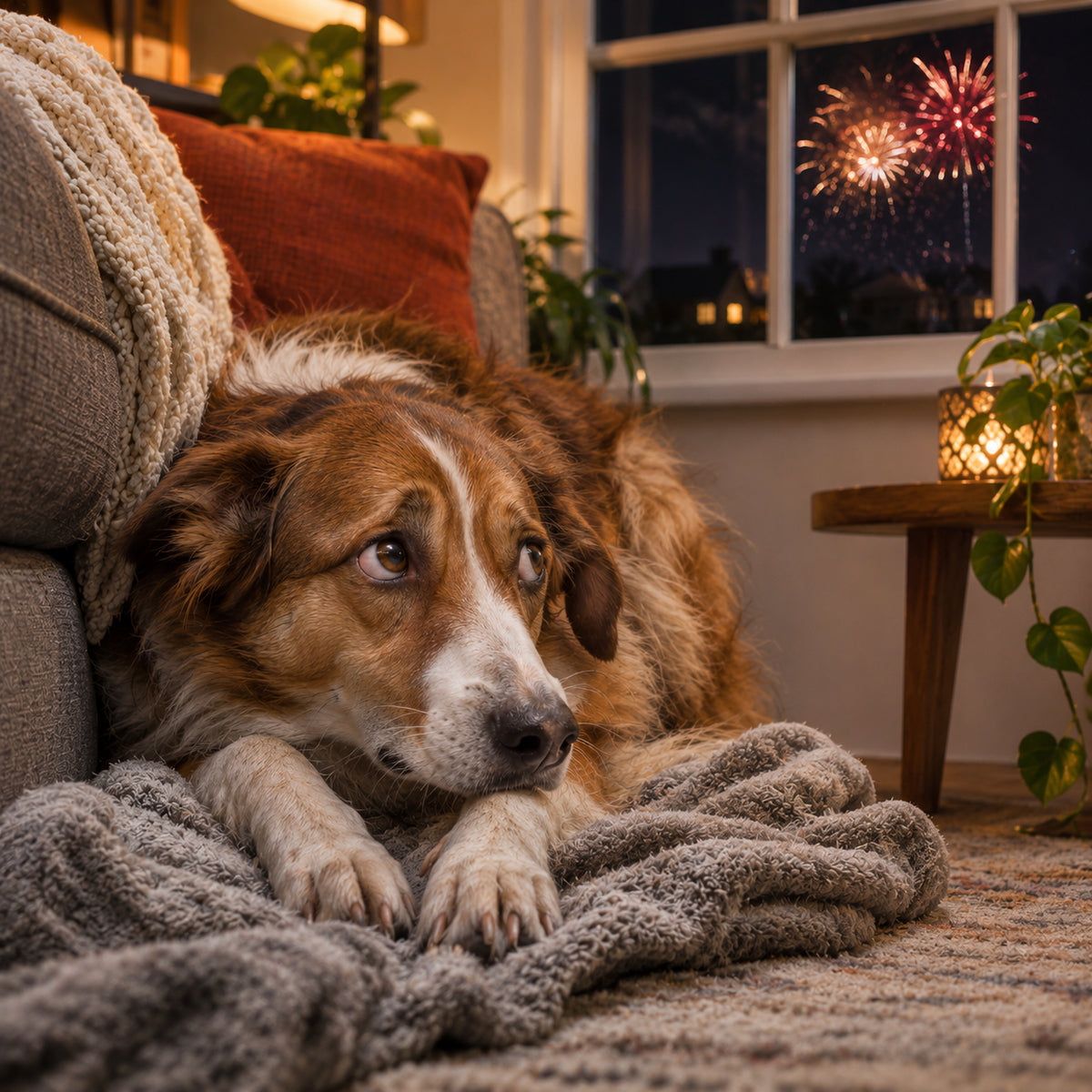
Bonfire Night (also known as Guy Fawkes Night) brings sparkling skies, cosy evenings and autumn celebrations. But for many dogs, the sudden bangs and unfamiliar flashes make this a frightening time of year. Watching your dog tremble, pace or disappear behind the sofa can leave you feeling helpless, particularly when fireworks continue across several evenings.
Helping starts with understanding what your dog is experiencing. A comfortable environment, thoughtful preparation and appropriate professional advice all have a place. Alongside these practical steps, digestive wellbeing deserves attention too.
Here, we explore why fireworks can unsettle dogs, how to support them through the celebrations, and where CaniNectar fits into everyday care, including what our professional field trial recorded about anxiety.
Why are fireworks frightening for dogs?
We understand why fireworks are happening and expect the noise to stop. Dogs do not have that context. Loud explosions and bright flashes can feel threatening, especially when they arrive suddenly and unpredictably.
Their sensitive senses can make the experience particularly intense. Even inside a familiar home, a dog may struggle to understand where the sounds are coming from or whether they are safe. Some bark or try to escape; others become unusually quiet.
Fear can also be easy to underestimate. A dog does not need to be howling or shaking dramatically to be uncomfortable. Changes such as hiding, refusing food or repeatedly seeking reassurance may indicate that they are struggling. Recognising these signals helps you respond to their needs.
Recognising your dog’s individual response
There is no single picture of an anxious dog. You might notice trembling, panting, pacing, clinginess or toileting indoors. Another dog may retreat behind furniture and refuse to come out.
Think about what is normal for your own dog. Are they choosing somewhere different to rest? Have they stopped showing interest in their usual activities? Observing the whole evening can be more helpful than judging their reaction to one bang.
A brief record of what you notice can also make conversations with your vet clearer. Include when fireworks began, how your dog responded and what seemed helpful. The aim is to understand their experience, rather than expecting them to cope like another dog.
Practical support
Prepare before the first bang
Check nearby display dates and plan walks for daylight, returning before fireworks are likely to begin. Make sure your dog’s microchip details are current in case they escape. If previous fireworks have caused severe distress, contact your vet beforehand to discuss support.
Preparation also means making decisions while things are quiet. Agree who will stay with your dog, choose where you will spend the evening and have familiar bedding ready.
Try to think beyond 5 November itself. Your plan should be easy to repeat whenever fireworks happen nearby, without requiring a complete change to family life. Having everything ready can help you feel more settled too, leaving you better able to notice what your dog needs.
Make home feel comfortable and secure
Close windows and curtains to soften the noise and flashes. Familiar television or music may help disguise sounds outside, provided the volume remains comfortable. Offer somewhere your dog can retreat, and allow them to choose whether they use it.
Follow their lead about company. If they approach for reassurance, calmly comfort them. If they prefer hiding, respect that choice and avoid pulling them out. Never punish behaviour caused by fear.
Success may look modest: your dog choosing to lie nearby, accepting company or settling somewhere they feel protected. Focus on making the evening manageable, without putting pressure on them to appear relaxed.
Understanding the connection
What does digestion have to do with anxiety?
The gut and brain communicate through a network called the gut-brain axis. Nerves, hormones, immune signals and compounds produced by gut microorganisms all contribute to this two-way communication.
Signals from the brain can influence appetite and digestive activity. Information from the digestive system can also interact with the nervous system. This helps explain why researchers investigate gut health and behaviour together, rather than treating them as entirely separate subjects.
However, the connection is complex. Fireworks fear cannot be explained simply as a gut problem, and supporting digestion does not automatically resolve anxiety. Gut-brain research provides useful biological context, while each dog’s behaviour still needs to be considered individually.
For owners, this encourages a broad approach: consider everyday physical wellbeing alongside the environment and support your dog needs during frightening events.
Everyday digestive care
Where does CaniNectar fit?
CaniNectar is a complementary feed for dogs, built around Enzyme Rich Malt Extract. Made in Britain, it uses a patented production process designed to preserve naturally occurring digestive enzyme activity.
Its nutritional approach starts with digestion. How food is broken down helps determine which nutrients are absorbed earlier and which materials continue further along the digestive tract. Those remaining materials help shape the environment encountered by gut microorganisms.
CaniNectar is designed to be added to your dog’s usual food as part of a daily feeding routine. Follow the product’s feeding guide for your dog’s weight. You can explore the product and its nutritional approach on the CaniNectar website.
During fireworks season, its role remains everyday digestive support. It should not be presented as an immediate calming treatment or a substitute for a fireworks management plan.
Our two-phase professional field trial involved 129 dogs assessed by 63 UK veterinary professionals, trainers and behaviourists. Different dogs and professionals participated in each phase, which took place months apart.
129 dogs
Assessed across two separate phases.
63
UK veterinary professionals, trainers and behaviourists.
38 of 42
Dogs with elevated anxiety scores were recorded as improved.
Among the 42 dogs that began with elevated anxiety scores, 38 were recorded as improved, while one was rated worse. The trial reported average anxiety scores falling from 4.29 to 3.23 on a five-point scale in its analysis of dogs with elevated anxiety.
Similar changes appeared across both phases: average anxiety scores decreased by 1.04 points in phase one and 1.10 points in phase two.
These are encouraging observations, but the study was unblinded and had no placebo control. It cannot establish that CaniNectar caused the changes. The findings also do not demonstrate an effect on fireworks anxiety specifically.
Alongside the scores, participating professionals shared observations about the dogs in their care. Their comments describe what changes looked like in everyday life.
“Much calmer overall. More confident with dogs and less reactive to sounds.”
“Calmer, more settled, ignoring triggers, and sleeping significantly better.”
Connie, a veterinary nurse taking part with her German Shorthaired Pointer, Norman, commented during the first week:
“He seems much calmer, and I have started allowing him out of the crate when I am not home. His anxiety seems to have decreased.”
These individual accounts add context to the trial’s numerical findings. Caroline’s observation about sound reactivity is particularly relevant to a discussion of noise sensitivity, although it does not establish an effect on fireworks fear specifically. As with the wider trial, these comments describe changes participants noticed; they cannot confirm that CaniNectar caused those changes.
Support for your individual dog
Putting the findings into perspective
For owners, the useful distinction is between an interesting research finding and a promise about their own dog. The trial gives us a reason to investigate behavioural observations further. It does not provide a guarantee that an individual dog will become calmer during Bonfire Night.
That distinction matters when deciding what support to arrange. A dog struggling with fireworks still needs a plan based on their actual response, whatever their feeding routine.
You can explore the broader evidence through the CaniNectar Science Hub, which brings together research and explainers about digestion, the microbiome and how different types of studies should be interpreted. Understanding both findings and limitations helps owners make informed decisions.
Build support around your dog
Think of your preparations as several connected parts of care. Your dog needs somewhere comfortable, someone who understands their signals and a plan for getting help when necessary. Everyday nutrition belongs within that wider picture.
Keep your expectations personal. Progress does not have to mean sleeping through every explosion. Your immediate priority is helping your dog feel protected and avoiding situations they find overwhelming.
Once the celebrations have passed, reflect on what worked and what you would change. Your notes can become the starting point for next year’s preparations, rather than having to remember everything when November comes around again.
Bonfire Night is easier to approach when you have a practical plan and realistic expectations. CaniNectar can form part of your dog’s daily digestive care, while our research offers a transparent starting point for learning more about the relationship between digestion and behaviour.
Meet Rolo! His owner Laura has noticed improvements in his digestion and behaviour with CaniNectar alongside behavioural support. Now he’s loving agility!
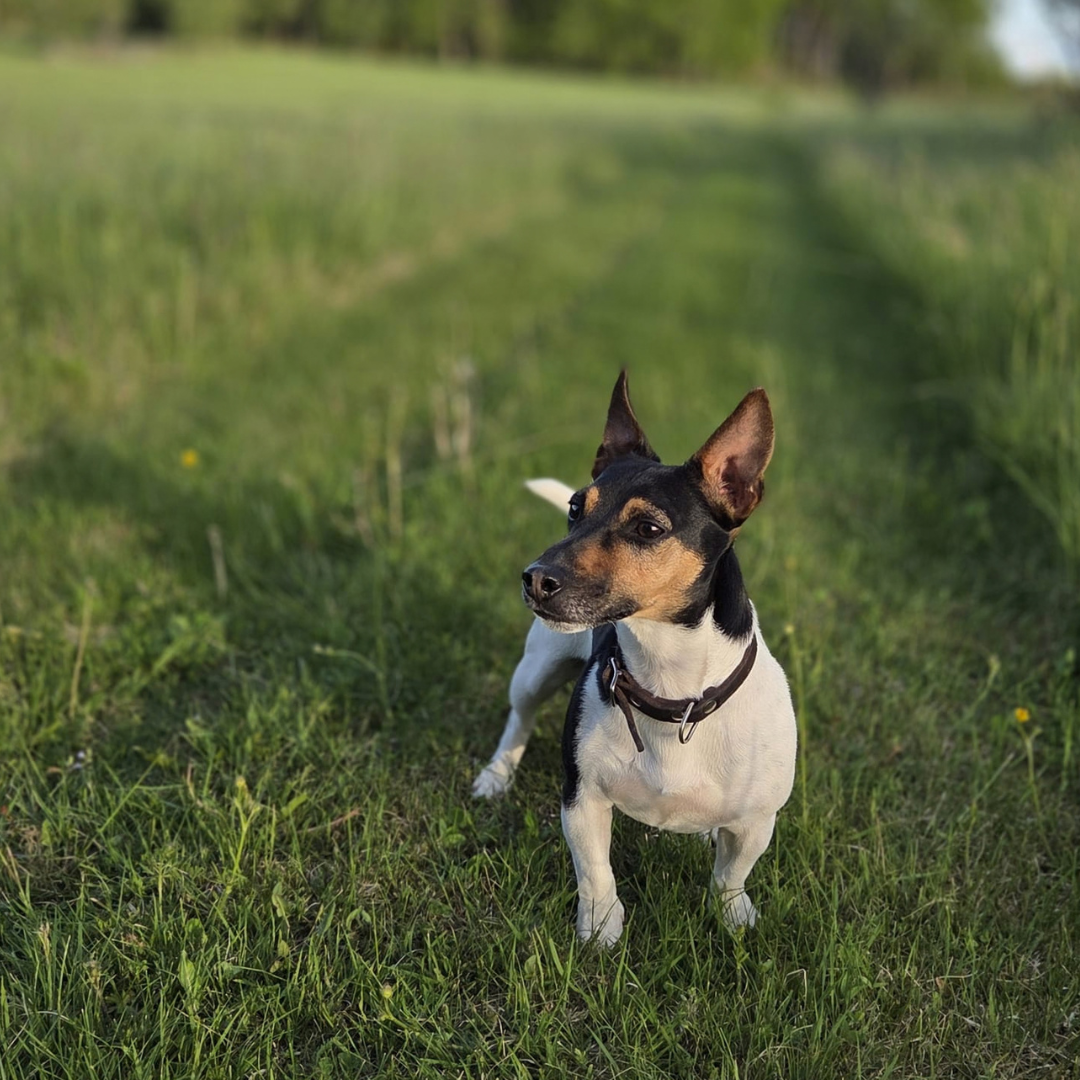
Meet Moss 🐾 This agility-loving Jack Russell started CaniNectar for tartar, and his owner noticed more: better focus and a silky, glossy coat ✨ Update coming soon!