

Picking up after your dog may not be the most glamorous part of ownership, but it can offer a useful daily window into their digestive health. A dog’s stools can change for all sorts of reasons, from a new food or an over-generous handful of treats to stress, scavenging or a temporary stomach upset. Looking at patterns — rather than worrying about one unusual poo — can help you recognise what is normal for your dog and when they may need extra support.
So, what should a healthy dog stool look like, what can changes mean, and where might daily digestive support such as CaniNectar fit in?
What does a healthy dog stool look like?
There is no single “perfect” poo for every dog. Diet, age, activity and hydration can all affect what you see. In general, a healthy stool is brown, formed and easy to pick up. It should hold its shape without being so hard that your dog strains.
Consistency is often more informative than one isolated change. If your dog usually produces firm, regular stools and has one softer movement after stealing something from the kitchen, it may be short-lived. Repeated loose stools, ongoing constipation or a persistent change in colour, frequency or volume deserves closer attention.
It is useful to notice:
- Consistency: Is the stool firm, soft, watery, dry or crumbly?
- Frequency: Is your dog going much more or less often than usual?
- Colour: Is it the normal shade of brown, or has it changed markedly?
- Contents: Can you see mucus, blood, undigested food or anything unusual?
- Comfort: Is your dog straining, rushing outside or appearing uncomfortable?
- The wider picture: Are appetite, energy, behaviour and body weight normal?
A simple note on your phone can make patterns easier to spot, especially when changing foods or introducing a supplement.
Why do stools change?
The digestive system has a complex job. Food must be broken into smaller components, nutrients must be absorbed, and the remaining material must move through the gut at an appropriate rate. The community of microorganisms living in the digestive tract, the gut microbiome, also interacts with what remains available to it.
That means stool quality can reflect several processes at once. A sudden diet change may alter digestion and transit time. Rich scraps or unfamiliar treats may provide more fat or fermentable material than the gut is used to. Stress can affect gut movement in some dogs, while parasites, infection, food sensitivities and underlying disease can also cause changes.
A stool change is best viewed as a useful sign, not a diagnosis.
Digestion happens before the microbiome
Conversations about gut health often begin with bacteria, but digestion starts much earlier. Enzymes help break down proteins, fats, starches and other components of food. Nutrients can then be released and absorbed, while the material that is not digested continues towards the large intestine.
Microbes therefore encounter what is left after digestion and absorption, not food exactly as it entered the bowl. This substrate can influence fermentation, microbial activity and the gut environment.
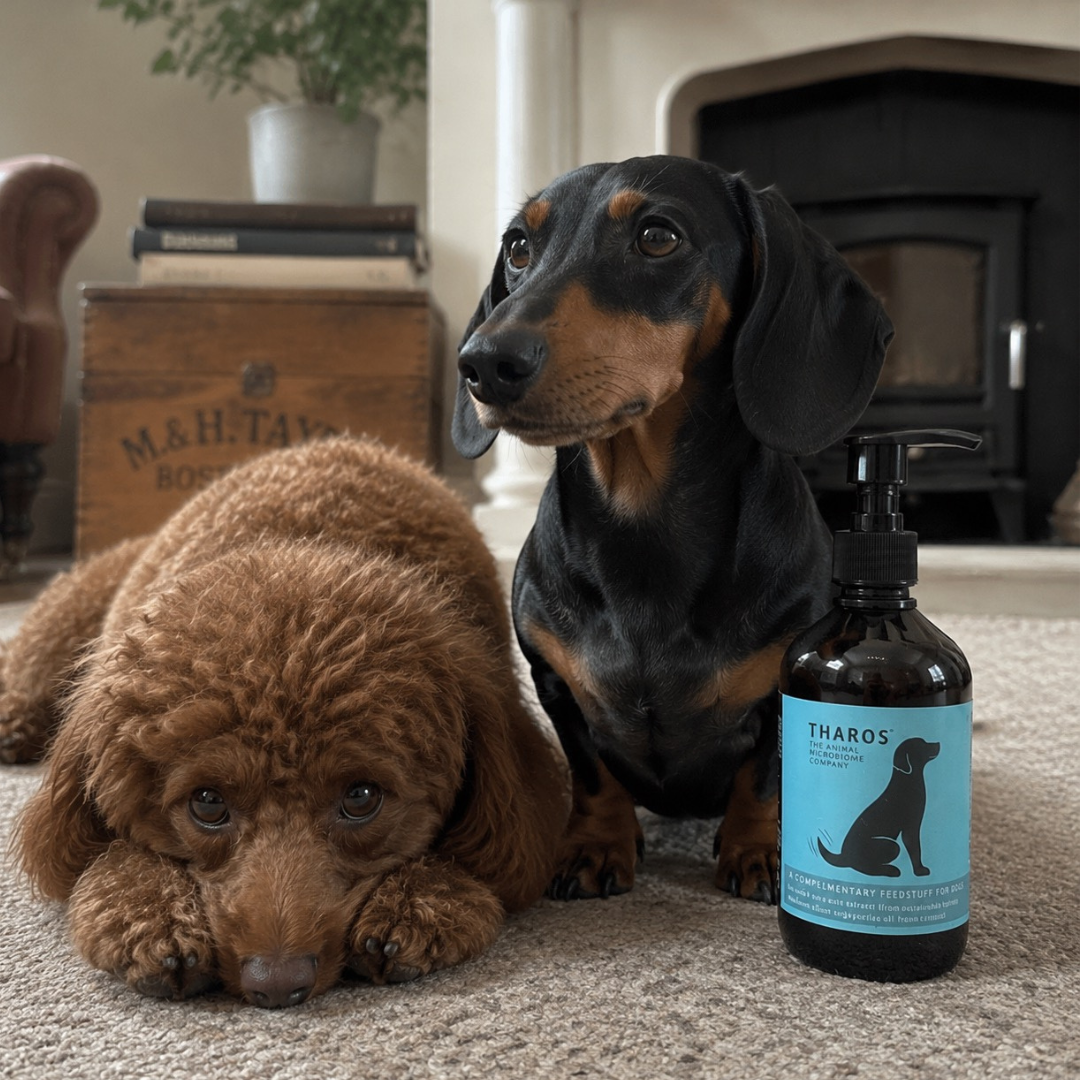
CaniNectar’s approach begins at this upstream stage. It is a liquid daily supplement made from enzyme-rich malt extract and added to a dog’s normal food. Rather than introducing live bacterial strains, it is designed to support the digestive environment by helping food to be broken down. CaniNectar describes this substrate-led approach as anabiomics: focusing on the conditions surrounding a dog’s existing microbial community.
Supporting digestion does not mean that every dog will produce identical stools, nor does stool appearance tell us everything about the microbiome. It does, however, offer a practical way for owners to monitor day-to-day digestive consistency.
What has CaniNectar research found?
CaniNectar’s research programme has looked at stool quality alongside other digestive, behavioural and microbiome measures. The findings are encouraging, although study design and limitations matter when interpreting them.
In an independent four-week observational study conducted with Blue Cross, 25 rescue dogs were followed across three cohorts and 24 completed the study. By week four, 80% of the dogs were reported to have reached ideal stool consistency, compared with 41.7% at the beginning. The study also recorded behavioural, focus, skin and tolerability measures. As an observational study, it cannot establish cause and effect in the same way as a randomised, blinded, placebo-controlled trial.
A more recent two-phase professional field trial involved 129 dogs and 63 UK veterinary professionals, trainers and behaviourists. It included digestive, stool and behavioural observations across two independently run phases. The clearest reported signal related to anxiety: 38 of the 42 dogs that entered the trial with elevated anxiety improved. The trial was not blinded and had no placebo group, so its results should be treated as real-world observations rather than definitive clinical proof. The company states that a randomised, blinded study is the next step.
Research involving UK Border Force working dogs has also explored stool quality, appetite and faecal microbiome composition during CaniNectar use. This work offers useful preliminary information, but the small sample means broad conclusions should be avoided.
Promising findings can guide further investigation, while methods, sample sizes and limitations tell us how much confidence to place in a conclusion. You can examine the study summaries and scientific explainers in the CaniNectar Science Library.
Introducing digestive support sensibly
If you decide to add CaniNectar to your dog’s routine, follow the product directions and observe your dog as an individual. Keep the rest of their diet reasonably consistent while introducing something new; changing several foods, treats and supplements at once makes it difficult to understand what is affecting their stools.
The CaniNectar professional trial reported that around one dog in twenty passed looser or softer stools during the first few days to a week. Where follow-up information was available, these changes were described as mild and self-resolving, usually within the first week. If a change concerns you, persists or is accompanied by other symptoms, stop and speak to your vet.
Good digestive care also rests on everyday basics: a complete and balanced diet appropriate for your dog, access to fresh water, regular exercise, careful treat portions, gradual food transitions and routine veterinary care. A supplement should support this foundation, not replace it.
When should you contact your vet?
Seek veterinary advice if diarrhoea or constipation persists, keeps returning or occurs alongside vomiting, pain, lethargy, loss of appetite, weight loss or dehydration. Blood in the stool, black or tar-like stools, a swollen abdomen, repeated unproductive straining or suspected ingestion of a toxic substance or foreign object requires prompt advice. Puppies, elderly dogs and dogs with existing health conditions may become unwell more quickly, so it is wise to seek help sooner.
Your vet can assess the whole dog, review diet and medication, and decide whether tests or treatment are needed. CaniNectar is a complementary feed supplement, not a medicine, and should not be used as a substitute for veterinary diagnosis or care.
Look for patterns, not perfection
Your dog’s poo is only one measure of digestive health, but it is a remarkably accessible one. By learning your dog’s normal pattern and watching for sustained changes, you can have more useful conversations with your vet and make more informed decisions about diet and daily gut support.
CaniNectar takes an upstream, digestion-first approach, using enzyme-rich malt extract to support the nutritional environment within the canine gut. Its research programme has reported encouraging stool and wider wellbeing observations, while also acknowledging the limitations of observational evidence.
If you would like to explore the mechanisms, study designs, findings and limitations in more depth, visit the CaniNectar Science Library. It brings together CaniNectar research and straightforward explainers on digestion, digestive enzymes, the microbiome and the gut’s nutritional environment, so you can see not only what the evidence suggests, but how those conclusions were reached.


Share:
CaniNectar Featured in Vet Times: Encouraging Results from Our Professional Field Trial