


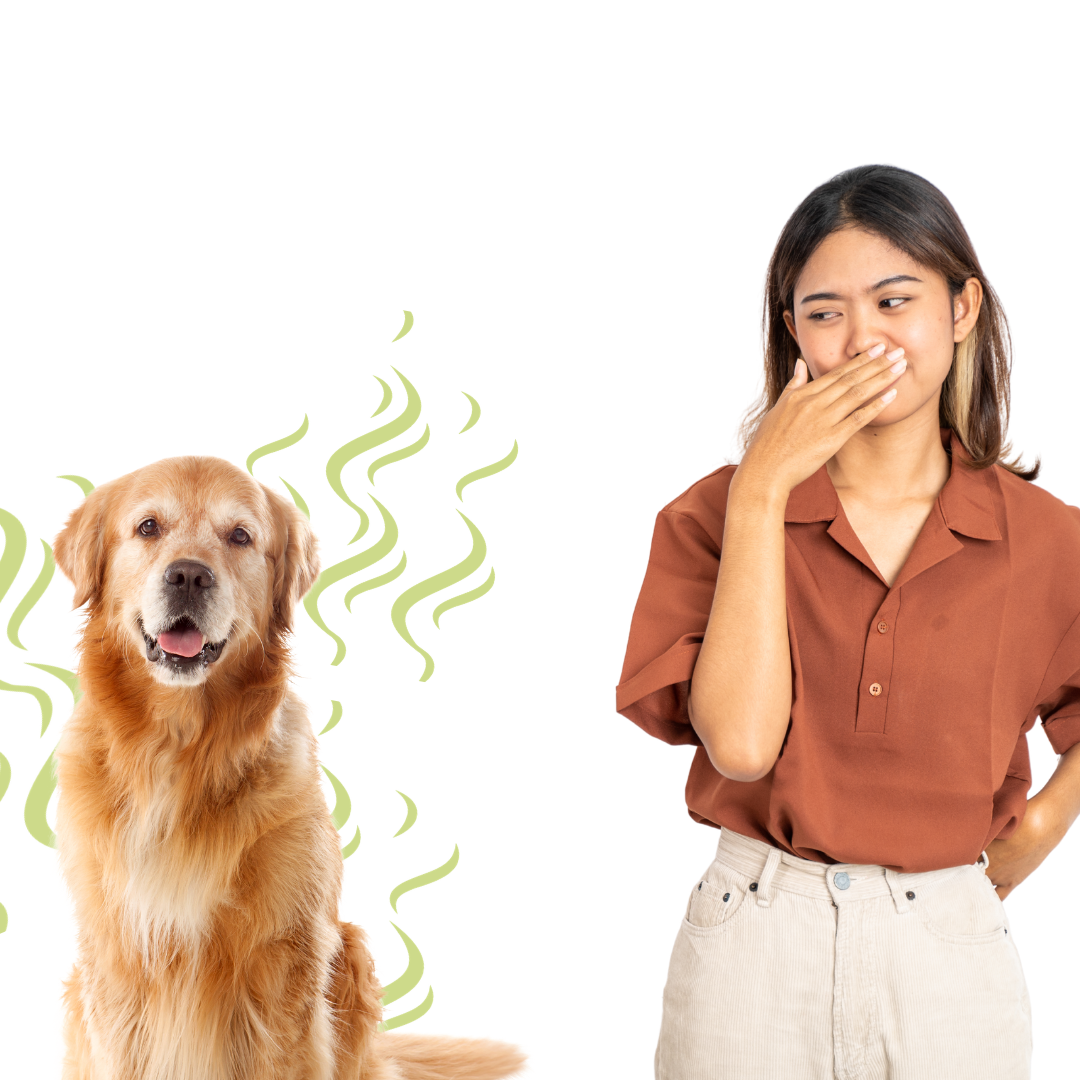
If your dog trembles at fireworks, barks obsessively when left alone, or seems permanently on edge, you've probably wondered what's going on inside their head. But what if the real answer lies somewhere quite different — specifically, in their gut?
Over the past decade, scientists have been uncovering a remarkable two-way communication network between the digestive system and the brain, known as the gut-brain axis. Whilst this research is still developing in the canine field, early findings are striking enough to make any thoughtful dog owner stop and reconsider how they're supporting their pet's mental wellbeing.
The Gut-Brain Axis: A Two-Way Street
The gut-brain axis is a complex, bidirectional communication system linking the intestinal microbiome — the vast community of bacteria, fungi, and other microorganisms living in your dog's digestive tract — with the central nervous system. Far from being a simple digestive pipe, the gut produces and regulates neurotransmitters, hormones, and immune signals that directly influence mood and behaviour (1).
Serotonin is perhaps the most well-known example. Often called the "feel-good" chemical, around 90% of the body's serotonin is actually produced in the gut, not the brain. Gut bacteria also play a significant role in regulating dopamine, norepinephrine, and GABA — the inhibitory neurotransmitter responsible for calming the nervous system (1). When the balance of gut bacteria is disrupted — a state known as dysbiosis — the production and regulation of these crucial chemicals can go awry, with measurable effects on anxiety, stress responses, and even aggression (2).
Additionally, the gut communicates with the brain via the vagus nerve, which acts like a direct telephone line from the digestive system to the central nervous system, carrying information about the gut environment upward in real time (1). The gut also influences the hypothalamic-pituitary-adrenal (HPA) axis, the body's primary stress-response system. When the HPA axis is overactivated — as it often is in anxious dogs — cortisol floods the bloodstream, which in turn can further damage the intestinal lining and worsen dysbiosis, creating a vicious cycle (1).
What the Research Says About Dogs Specifically
Researchers have begun investigating whether measurable differences in gut microbiome composition exist between anxious or aggressive dogs and behaviourally healthy ones. The findings, whilst still preliminary, are intriguing.
One review of canine anxiety disorders noted that dogs showing aggressive behaviour tended to have a lower abundance of Bacteroidetes and higher levels of certain bacterial genera, including Catenibacterium and Megamonas, compared to non-aggressive dogs (1). Phobic dogs, meanwhile, showed a notably higher proportion of Lactobacillus — a genus well-known for its role in GABA production — though researchers caution that whether this represents a cause or a consequence of the behavioural state remains unclear (1).
A wider critical review of studies examining the gut microbiome and canine behaviour concluded that emerging evidence does suggest meaningful links between microbiome composition and behavioural and cognitive outcomes, including anxiety and stress responses (2). Dogs rated as more anxious using a validated owner questionnaire were found to have greater gut microbial diversity alongside higher relative abundances of specific bacterial families compared to calmer dogs (2). Separately, a pilot study found that fearful dogs had shifts in microbial composition, reduced levels of key neurotransmitter precursors in the blood, and elevated concentrations of bile acids — all pointing toward functional disruption along the gut-brain axis (2).
Importantly, the relationship between gut health and canine cognition has also been explored. Dogs with poorer working memory performance had a relatively higher abundance of Actinobacteria in their faecal samples — a finding that mirrors observations in humans with Alzheimer's disease and suggests potential parallels between gut health and cognitive function across species (2).
Researchers at Iowa State University have further highlighted that the dog gut microbiome more closely resembles the human microbiome in composition and functional overlap than the commonly used rodent models, making dogs an especially valuable species for translational research in this area (3).
Why This Matters for Your Dog's Daily Life
It is easy to think of anxiety purely as a behavioural or training issue — something to be managed with patience, routine, and perhaps medication. But if dysbiosis is quietly fuelling your dog's stress responses from the inside, addressing behaviour alone may only ever offer partial relief.
An imbalanced gut can elevate inflammatory markers, increase intestinal permeability (sometimes called "leaky gut"), and suppress the production of calming neurotransmitters — all of which prime the nervous system for heightened reactivity (1). Conversely, a well-nourished, diverse microbiome appears to support emotional regulation, stress resilience, and even trainability. As one review put it, a healthier gut means a happier, more balanced dog (2).
Diet, age, breed, living environment, and health conditions all shape the gut microbiome (2). However, the quality and composition of what your dog eats daily is one of the most powerful and accessible levers you have to influence their gut environment.

How CaniNectar Can Help
This is where CaniNectar offers something genuinely useful. Made from malted barley using ancient, artisan varieties that have been cultivated in Europe for over 800 years, CaniNectar is produced through a patented process that preserves a remarkable array of naturally occurring digestive enzymes (4).
These enzymes — including protease, lipase, amylase, fructanase, cellulase, and phytase — help your dog break down and absorb nutrients from food far more efficiently. Poor digestion is a key driver of dysbiosis: when food isn't properly broken down, it ferments in the gut, feeding harmful bacteria and triggering the kind of microbial imbalance that research increasingly links to anxiety and stress reactivity (1).
CaniNectar also delivers essential B vitamins, including thiamine (B1), which supports brain function and nerve health, and B12, which is critical for maintaining nerve function and red blood cell production (4). These nutrients play a direct role in supporting the neurological pathways that the gut-brain axis relies upon.
Alongside its enzyme and vitamin content, CaniNectar provides a range of antioxidants — including ferulic acid, catechins, and phenolic acids — that help reduce oxidative stress and inflammation (4). Given that inflammatory states are closely linked to gut barrier dysfunction and elevated anxiety, these compounds offer meaningful support to the whole system.
By promoting a balanced gut microbiome, reducing undigested food fermentation, and supporting efficient nutrient absorption, CaniNectar addresses the gut environment from the ground up — creating the conditions in which beneficial bacteria can thrive, and stress-regulating neurotransmitters can be produced more effectively.
A New Way to Think About Your Dog's Wellbeing
Canine anxiety is rarely a single-cause problem. Genetics, early life experiences, training history, and environment all play a role. But the science is increasingly pointing to the gut as an underappreciated piece of the puzzle — one that is not fixed at birth and can be meaningfully influenced through the right nutritional support.
If your dog struggles with anxiety, it is worth asking not only what is happening in their environment, but what is happening in their microbiome. Supporting gut health is not a magic cure, but it is a logical, evidence-informed place to start. And with a product like CaniNectar, giving that support is as simple as adding a few drops to your dog's daily bowl. A calmer gut might just mean a calmer dog.
References
- Sacoor, C., Marugg, J. D., Lima, N. R., Empadinhas, N., & Montezinho, L. (2024). Gut-brain axis impact on canine anxiety disorders: New challenges for behavioral veterinary medicine. Veterinary Medicine International, 2024, Article 2856759. https://doi.org/10.1155/2024/2856759
- Crisante, A., Newberry, F., Clegg, S. R., Mitchell, G. L., Pike, T. W., Ratcliffe, V., Spain, A., Wilkinson, A., Zulch, H., & Mills, D. S. (2025). A critical review of research concerning the gut microbiome in dogs and its relationship with behaviour. Applied Animal Behaviour Science, 292, Article 106755. https://doi.org/10.1016/j.applanim.2025.106755
- Ambrosini, Y. M., Borcherding, D., Kanthasamy, A., Kim, H. J., Willette, A. A., Jergens, A., Allenspach, K., & Mochel, J. P. (2019). The gut-brain axis in neurodegenerative diseases and relevance of the canine model: A review. Frontiers in Aging Neuroscience, 11, Article 130. https://doi.org/10.3389/fnagi.2019.00130
- Tharos Ltd. (2026). CaniNectar: Benefits and product information. CaniNectar. https://caninectar.com
Share:
Alfred's and Nelly's Story
Bella's story