


We've never known more about nutrition than we do today. Superfoods, gut health, the microbiome, these concepts have transformed how millions of people think about what they eat. Yet when it comes to our dogs, many of us still pour the same kibble into the same bowl every single day and assume that's enough. But is it?
A growing body of research and a new wave of canine supplements suggests that modern dog diets, however well-intentioned, may be leaving some significant nutritional gaps. The question isn't whether your dog is fed. It's whether your dog is truly nourished.
The Problem with "Complete and Balanced"
Walk down the pet food aisle of any supermarket and you'll find bags proudly labelled "complete and balanced." It's reassuring language, and it's not entirely misleading - commercial dog foods do meet the minimum nutritional standards set by regulatory bodies. But minimum standards and optimal health are two very different things.
Processing is a significant factor. The high temperatures used in manufacturing kibble destroy a proportion of the naturally occurring enzymes and heat-sensitive vitamins found in raw ingredients. The end product may technically contain the right nutrients on paper, but the bioavailability - how effectively a dog can actually absorb and use those nutrients - can be considerably lower than the label implies.
Then there's the issue of individual variation. Just as humans differ in their ability to digest and absorb nutrients, so do dogs. Age, breed, gut health, stress levels, and activity all influence how efficiently a dog processes its food. A working police dog will have very different nutritional demands from a sedentary house pet, and a senior dog's digestive system simply won't function the way it did at two years old.
The Gut: Where Nutrition Really Happens
In recent years, veterinary science has increasingly turned its attention to the canine gut microbiome, the vast and complex community of bacteria living in a dog's digestive tract. This microscopic ecosystem doesn't just influence digestion; it plays a role in immune function, behaviour, skin health, and even mood.
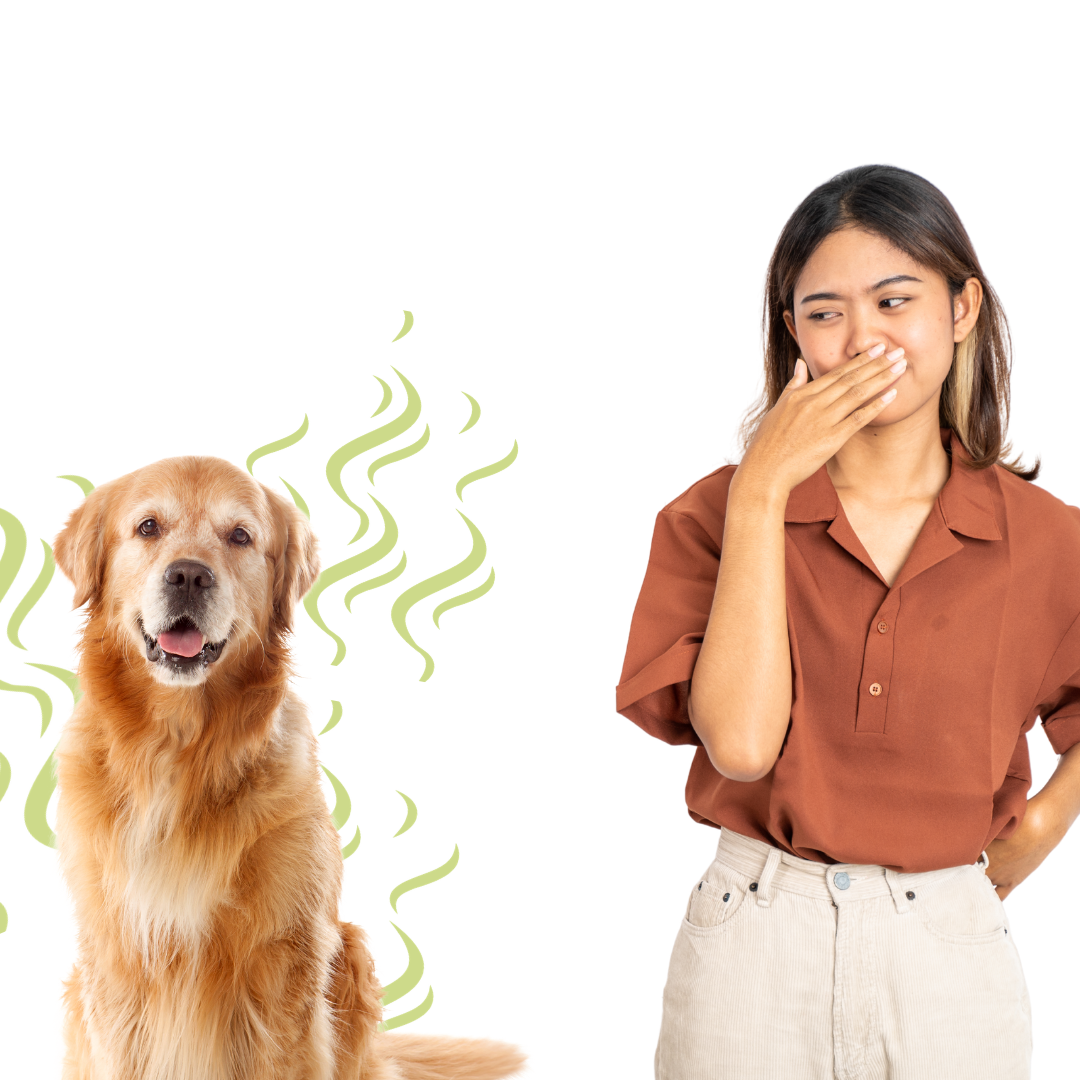
When the gut microbiome is out of balance - a condition known as dysbiosis - the effects can be wide-ranging. Loose stools, excessive flatulence, dull coats, persistent itching, anxiety, and hyperactivity can all be signs that something is wrong at the microbial level. And because so many of these symptoms are vague and common, they're often attributed to other causes or simply accepted as normal.
This is where targeted supplementation becomes genuinely interesting.

Introducing CaniNectar: A Supplement Rooted in Tradition and Science
CaniNectar is a canine digestive supplement made from malted barley, drawing on ancient, artisan barley varieties that have been valued in Europe for over 800 years for their high natural enzyme levels. What makes it distinctive is its patented production process, which preserves those naturally occurring enzymes rather than destroying them through heat, the very problem that afflicts so much processed pet food.
Each dose delivers a comprehensive profile of digestive enzymes including protease (for protein breakdown), lipase (for fat digestion), amylase (for starch), and fructanase, cellulase, xylanase, beta-glucanase, and phytase, the latter being particularly important for mineral absorption. Alongside these, CaniNectar provides the full suite of B vitamins, key minerals including magnesium, zinc, selenium, and iron, and a range of natural antioxidants such as ferulic acid, flavan-3-ols, and other phenolic acids that help protect cells from oxidative stress.
In practical terms, the goal is straightforward: help dogs get more from the food they're already eating.
What Does the Research Actually Show?
In autumn 2023, an exploratory study examined the effects of CaniNectar supplementation on a group of working dogs (primarily UK Border Force dogs) whose shared environment and consistent diet made them an unusually controlled sample. The analysis examined microbiome samples taken before and after supplementation, alongside handler ratings across categories including appetite, dropping quality, behaviour, coat condition, and focus.
The findings were cautiously encouraging. There was a general trend towards increases in "good" gut bacteria, including Faecalibacterium, Blautia, and Ruminococcus, and decreases in bacteria associated with poor gut health, such as Escherichia/Shigella, Streptococcus, Treponema, and Campylobacter. Notably, the effect appeared most pronounced in older dogs (aged five years and above), who were 2.3 times more likely to show improved dropping quality ratings and 4.2 times more likely to show improved appetite ratings compared to younger dogs in the study.
One dog, Willow, stood out as the most improved across nearly all handler rating categories. Her microbiome data told a corresponding story: a substantial increase in good genera and a substantial decrease in bad genera. It's the kind of correlation that, while far from conclusive in a small study, is exactly the sort of signal that warrants further investigation.
The analysis was honest about its limitations. The sample was small, the findings are exploratory rather than definitive, and the study's authors were careful to stress that nothing should be generalised beyond the dogs involved. However, the consistency of patterns within the controlled UKBF sample - particularly the near-universal decreases in Streptococcus and Treponema, and increases in Faecalibacterium - suggests these are not random fluctuations. They point to a biological mechanism worth taking seriously.
Why Older Dogs May Benefit Most
One of the more intriguing findings from the study is the apparent age effect. Older dogs seemed to respond more strongly to supplementation, and this makes intuitive sense. As dogs age, digestive enzyme production naturally declines, nutrient absorption becomes less efficient, and the gut microbiome can become less resilient. Supplementing with a product rich in digestive enzymes and microbiome-supporting compounds is, in effect, helping an ageing system do what it used to do naturally.
This mirrors what we see in human nutrition, where older adults are frequently advised to supplement with digestive enzymes, B vitamins, and prebiotics precisely because the gut becomes less efficient with age. There's no reason to think the same principle shouldn't apply to our dogs.

A Practical Consideration for Dog Owners
None of this is to suggest that supplementation is a replacement for good-quality food, regular veterinary care, or adequate exercise. It isn't. But it may be a valuable addition to the toolkit — particularly for dogs showing subtle signs of digestive discomfort, dogs on predominantly processed diets, working or highly active dogs with elevated nutritional demands, and older dogs whose digestive systems need a little extra support.
The supplement market for pets is crowded, and scepticism is warranted. What distinguishes CaniNectar from many competitors is the specificity of its formulation — not a scattergun approach, but a focused effort to address the enzymatic and microbial gaps that modern dog diets are most likely to create — and the fact that it is backed by genuine research, however early-stage that research currently is.
The Bottom Line
Modern dogs are better fed than at any point in history. But being fed and being optimally nourished are not the same thing. The gut microbiome is increasingly understood to be central to almost every aspect of a dog's health, from digestion and immunity to behaviour and skin condition. When that ecosystem is supported — through the right enzymes, nutrients, and microbial balance — dogs tend to thrive in ways that kibble alone simply cannot guarantee.
Supplements like CaniNectar won't transform an unhealthy dog overnight. But for owners who want to go beyond the minimum and give their dog the best possible foundation for long-term health, the evidence (preliminary as it is) suggests they may well be the missing link that modern dog diets have been lacking.
Always consult your vet before introducing any new supplement to your dog's diet.


Share:
How a Healthy Digestive System Could Transform Your Dog's Coat
"Why Does My Dog Seem Worse Before Getting Better?" - Understanding the Herxheimer Reaction