

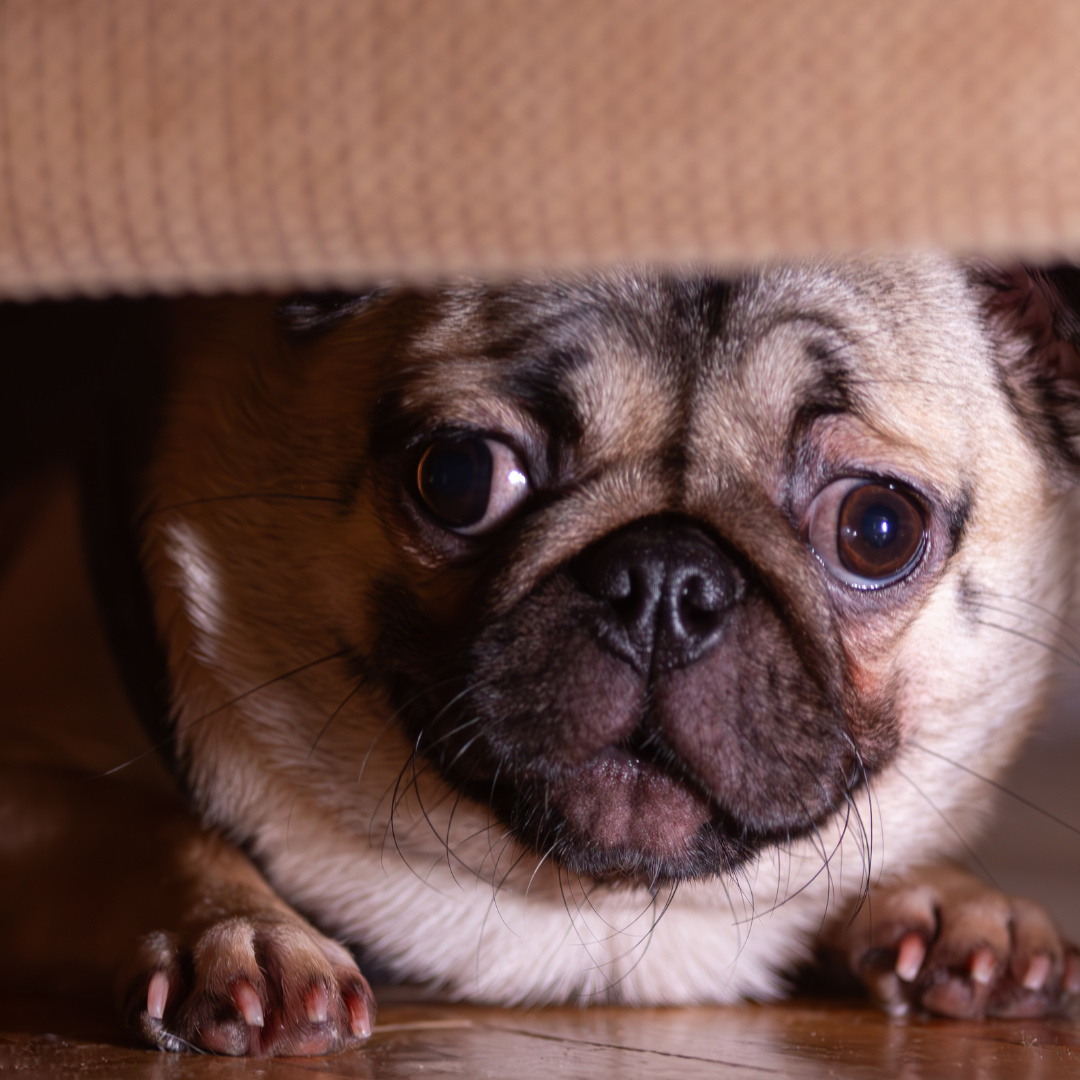
Fireworks can be deeply frightening for dogs. Loud bangs, flashes, vibrations and unpredictable timing can trigger trembling, hiding, pacing, barking or attempts to escape.
Preparing the home, adjusting your dog’s routine and seeking professional help when fear is severe are the most important steps. Digestive health may also form part of the wider wellbeing picture, but it should not be treated as a replacement for behavioural support or veterinary care.
Why Are Dogs Frightened of Fireworks?
Fireworks combine several potentially frightening experiences:
- sudden, extremely loud noises
- unpredictable timing
- bright flashes
- vibrations through the ground and building
- unfamiliar smells
- changes to the household routine
A dog cannot understand that the noise is part of a celebration or predict when the next explosion will occur. For a noise-sensitive dog, each bang may trigger a genuine fear response.
Signs That Your Dog Is Struggling
Fear can look different in different dogs. Possible signs include:
- trembling or shaking
- panting when the dog is not hot
- pacing or an inability to settle
- hiding
- drooling
- barking or whining
- refusing food
- trying to escape
- destructive behaviour
- urinating or defecating indoors
- remaining unusually alert after the noise has stopped
Some dogs show obvious panic, while others become unusually quiet or withdrawn. Both reactions deserve attention.
Prepare Before Fireworks Begin
Planning is much easier before the first firework is heard.
Walk earlier
Exercise your dog during daylight and return home before displays are likely to begin. Keep your dog on a secure lead if unexpected fireworks are possible.
Check identification
Make sure your dog’s microchip details are current and that any collar identification is secure. Frightened dogs may attempt to escape through doors, windows or gardens.
Create a safe place
Provide a quiet area where your dog can choose to hide. This might be a covered crate, space behind a sofa or another familiar area containing comfortable bedding.
Do not force your dog into the space or prevent them from leaving it. The aim is to provide choice and security.
Close curtains and windows
Closing curtains helps reduce flashes, while closed windows can lessen noise and prevent a frightened dog from escaping.
Prepare background sound
Television, radio, familiar music or white noise may help disguise some of the external sounds. Use something your dog already knows and keep the volume at a comfortable level.
What Should You Do During Fireworks?
Try to remain calm and follow your dog’s lead. It is fine to provide gentle reassurance if your dog seeks contact. Comforting a frightened dog does not reward fear.
If your dog prefers to hide, allow them to do so without repeatedly disturbing them. Keep doors secure and accompany them outside if a toilet break is necessary.
Never punish barking, accidents or destructive behaviour caused by panic. Punishment can increase fear and make future reactions worse.
Keep fresh water available, as panting and anxiety may increase thirst. Avoid leaving a highly distressed dog alone during a known display where possible.
When Should You Speak to Your Vet?
Contact your vet well before firework season if your dog:
- panics or attempts to escape
- injures themselves during noise events
- cannot recover after the noise stops
- refuses food or water
- shows severe fear during every display
- has become progressively more noise-sensitive
Your vet can rule out health problems that may be increasing sensitivity and discuss whether medication or a referral to a qualified behaviourist would be appropriate.
Medication should be discussed in advance rather than sought after a dog is already in severe distress.
Can Dogs Be Desensitised to Firework Sounds?
Carefully managed sound desensitisation and counterconditioning may help some dogs. Recordings are introduced at a volume low enough that the dog remains comfortable and are gradually increased over time while being associated with something positive.
This process should begin months before firework season. Playing firework recordings loudly or progressing too quickly can increase fear rather than reduce it.
A qualified behaviourist can help develop an appropriate programme for dogs with established noise sensitivity.
What Does the Gut Have to Do With Anxiety?
The gastrointestinal system and brain communicate through neural, hormonal, immune and metabolic pathways. This communication network is known as the gut-brain axis.
Microorganisms in the gut produce metabolites that can interact with intestinal cells and wider physiological systems. Diet, stress, medication, health and environment can all influence the microbiome.
Research into the canine gut-brain axis is growing, but it remains an emerging field. A small exploratory study comparing eight fearful dogs with eight control dogs found differences in some bacterial groups and metabolites. However, it found no significant difference in overall microbial diversity and could not establish whether the microbial changes caused or resulted from fearful behaviour.
Gut health may therefore be part of a dog’s wider physical and emotional environment, but firework fear should not automatically be attributed to the microbiome.
Learn more in our guide to the gut-brain axis in dogs.
Where CaniNectar Fits
CaniNectar is a complementary feed containing Enzyme Rich Malt Extract with naturally occurring amylase, protease and lipase activity. It is designed to support the digestion of carbohydrates, proteins and fats within the dog’s existing diet.
The nutritional rationale begins earlier in digestion. Supporting the breakdown of food in the small intestine can influence nutrient availability and the material that continues into the large intestine.

What Has CaniNectar Research Found?
CaniNectar’s two-phase professional field trial involved 129 dogs and 63 UK veterinary professionals, trainers and behaviourists.
Among the dogs that began the trial with elevated anxiety ratings, 38 of 42 improved. Importantly, a similar average change was observed independently in both phases of the trial.
These real-world findings provide an encouraging behavioural signal, but the study was observational and CaniNectar was not tested specifically for firework fear. It should not be presented as a fast-acting calming product or an alternative to behavioural treatment or veterinary medication.
CaniNectar is intended for consistent nutritional support rather than occasional use immediately before a firework display.
Read the two-phase professional field trial or learn more about CaniNectar digestive support.
A Complete Firework Support Plan
The most useful plan combines several forms of support:
- prepare a secure and comfortable environment
- reduce exposure to noise and flashes
- adjust walking and toilet routines
- allow your dog to choose whether to hide or seek comfort
- begin appropriate sound training well in advance
- maintain consistent feeding and digestive routines
- seek veterinary help for significant fear
No single supplement, training exercise or environmental change will suit every dog. The best approach is shaped around the individual dog and the severity of their response.
Frequently Asked Questions
Should I comfort my dog during fireworks?
Yes. If your dog seeks calm contact, it is appropriate to comfort them. If they prefer to hide, give them space while ensuring the area is safe.
Should I take my dog to a firework display?
No. Even dogs that appear confident can become frightened by close, unpredictable explosions. Leave them safely at home with appropriate supervision.
Can I walk my dog while fireworks are going off?
It is safer to walk earlier in the day. If an outside toilet break is necessary, keep your dog securely on a lead and remain close to home.
Can CaniNectar stop firework anxiety?
No. CaniNectar supports digestion and has produced encouraging behavioural observations in field research, but it has not been tested as a treatment for firework fear.
When should I start preparing?
Environmental preparation can begin immediately. Structured desensitisation should ideally start several months before firework season, with professional guidance where necessary.
The Bottom Line
Firework fear is a genuine welfare concern, not bad behaviour. Preparation, a secure environment, appropriate training and veterinary support provide the strongest foundation for helping a frightened dog.
The gut-brain connection is a promising area of canine research, and supporting normal digestion may contribute to wider wellbeing. However, it should sit alongside established firework-management strategies rather than replace them.
References
- Blue Cross. Dogs and fireworks. View the guidance.
- Pilla R, Suchodolski JS. The Role of the Canine Gut Microbiome and Metabolome in Health and Gastrointestinal Disease. Frontiers in Veterinary Science. 2020;6:498. View the review.
- Sacchettino L et al. Gut microbiota and metabolome profiles in fearful dogs. PLOS ONE. 2025. View the study.
- CaniNectar. Two-Phase Professional Field Trial. 2026. View the study summary.

Share:
Antibiotics and Your Dog's Gut Health: What Owners Should Know
How Your Dog's Gut Health Could Prevent Anal Gland Problems