

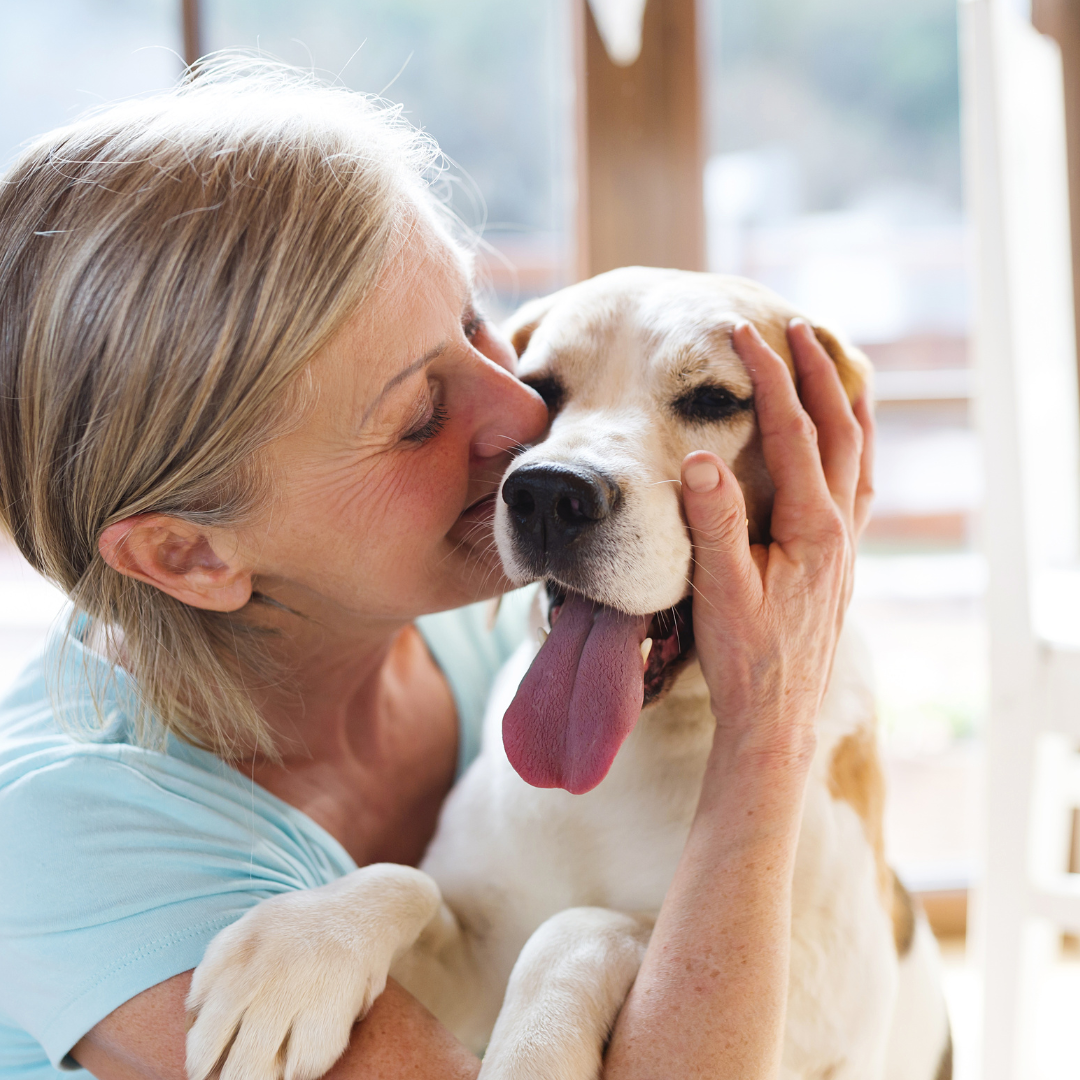
There is a truth that every dog owner instinctively knows: when your dog is not doing well, neither are you. Whether it is the exhaustion of managing a dog who will not settle, the frustration of unpredictable aggression on walks, or the helplessness of watching an anxious dog pace and whine, the emotional weight is real and significant. What is far less widely understood is that many of these behavioural challenges have a biological root, and that root is increasingly being traced back to the gut.
When the Dog Struggles, the Owner Suffers Too
The bond between a dog and their owner is one of the most studied relationships in human-animal science. It is also, for many households, one of the most emotionally loaded. A landmark review published in the journal Pets examined 21 studies on the relationship between dog behavioural problems and owner well-being, and the findings were sobering (1). Dog behavioural problems, including aggression, separation anxiety, and fear-related behaviours, were consistently associated with increased stress, frustration, caregiver burden, and symptoms of both depression and anxiety in owners (1). Owners reported social withdrawal, strained relationships, and a profound sense of isolation, often feeling judged by strangers, friends, and family alike (1).
These are not trivial inconveniences. Social isolation and loneliness carry well-documented risks for physical and psychological health, including cardiovascular disease, anxiety, and depression (1). The research makes clear that a dog struggling with behavioural difficulties is not simply an inconvenience to manage; it is a genuine threat to the well-being of everyone in the household. And yet, in the vast majority of cases, the question of why the dog is struggling in the first place goes unanswered. The training plans are attempted, the routines are adjusted, but the underlying biology is rarely addressed. That is where the gut-brain axis comes in.
What Is the Gut-Brain Axis?
The gut-brain axis is the two-way communication network linking the gastrointestinal tract and the brain, operating through a sophisticated combination of neural, hormonal, and immunological pathways (2, 3). At its centre is the enteric nervous system, sometimes called the "second brain," a vast network of approximately 500 million neurons embedded in the gut lining that communicates directly with the central nervous system via the vagus nerve (2). The gut microbiome, the trillions of bacteria, fungi, and other microorganisms inhabiting the digestive tract, plays a central role in regulating this communication (2, 3).
A balanced microbiome produces neurotransmitters including serotonin, dopamine, and gamma-aminobutyric acid (GABA), all of which govern mood, stress responses, and cognitive function (2). Approximately 90% of the body's serotonin is produced in the gut (2). When the microbiome is disrupted, a state known as dysbiosis, this neurochemical signalling breaks down, and the consequences for behaviour can be profound (2, 3). In healthy dogs, the gut microbiota is dominated by members of the phyla Bacteroidetes, Fusobacteria, and Firmicutes, and disruptions to this balance have been directly linked to anxiety, aggression, and stress-related behavioural disorders (2).
An Unhappy Gut Creates an Unhappy Dog
The evidence linking gut dysbiosis to canine behavioural problems is growing rapidly. A review published in Veterinary Medicine International found that an estimated 72.5% of dogs show anxiety-like behaviours to some degree, and identified the gut microbiome as a central player in the development of these conditions (2). Studies in dogs with aggressive behaviour have found significant differences in microbiota composition compared to non-aggressive dogs, including a lower abundance of Bacteroidetes and alterations in specific bacterial genera (2). Dogs with phobic disorders also showed distinct microbiome profiles, underlining the connection between gut ecology and emotional regulation (2).
The mechanisms are well established. Gut microbiota regulate neurotransmitter levels, including serotonin and GABA, which directly govern anxiety and mood (2). They modulate the hypothalamic-pituitary-adrenal (HPA) axis, the body's primary stress response system, meaning that a disrupted microbiome can perpetuate a chronic state of physiological stress (2). They influence intestinal permeability, and a leaky gut allows inflammatory signals to reach the brain, further disrupting emotional regulation (2, 3). Furthermore, short-chain fatty acids (SCFAs) produced by gut bacteria cross the blood-brain barrier and directly influence brain function, including learning, memory, and stress behaviours (2, 3).
Dogs are particularly relevant models for understanding these mechanisms. Research published in Frontiers in Aging Neuroscience noted that the canine gut microbiome more closely resembles the human gut microbiome in composition and functional overlap than any rodent model, making findings from dogs especially meaningful (3). Dogs and humans share similar dietary adaptations, similar gastrointestinal physiology, and a shared domestic environment, all of which shape the microbiome in comparable ways (3).
The Vicious Cycle: Stress, the Gut, and Behaviour
One of the most important insights from gut-brain research is that the relationship between stress and gut health is bidirectional, and in dogs with ongoing behavioural difficulties, it can become deeply entrenched. Psychological stress disrupts the gut microbiome, reducing populations of beneficial bacteria and increasing harmful ones. In turn, this dysbiosis amplifies the stress response, creating a cycle that behavioural training alone is unlikely to break (2).
For a dog living with separation anxiety, noise sensitivity, or chronic fear, the nervous system remains in a heightened state of alert. The gut remains inflamed and imbalanced. The very neurotransmitters needed to calm the brain are being underproduced. And back in the home, their owner is absorbing the emotional and social consequences of a dog who simply cannot settle, no matter how much effort is invested (1).
This is a biological problem requiring a biological solution, and it must be part of any serious conversation about canine behaviour and welfare. As the research on the gut-brain axis makes clear, a dog whose gut cannot support healthy neurochemical function is a dog whose behaviour will always be working against its owner's efforts (2, 3).
A Happy Gut, A Calmer Dog, A Happier Household
This is the central promise of supporting the gut-brain axis: not just better digestion, but a genuinely calmer, more balanced dog, and by extension, a more peaceful and connected life for the owner. The Barcelos et al. review found that most owners who cited behavioural problems as the primary reason for considering dog relinquishment said they would keep their dog if the problems could be corrected (1). Addressing gut health is one of the most promising and underutilised tools available to help achieve exactly that.
How CaniNectar Supports the Gut-Brain Axis
This is where CaniNectar comes in. Made from malted barley using ancient, artisan barley varieties that have been valued in Europe for over 800 years, CaniNectar is produced through a patented process that preserves naturally occurring digestive enzymes. The result is a supplement uniquely positioned to support your dog's gut health from the ground up and, by extension, their behaviour, mood, and overall well-being.
Digestive enzymes for better nutrient absorption. CaniNectar provides a comprehensive range of naturally occurring enzymes, including protease, lipase, amylase, fructanase, cellulase, xylanase, beta-glucanase, and phytase. Together, these ensure that your dog is properly breaking down and absorbing proteins, fats, carbohydrates, plant fibres, and minerals. When the gut can extract the full nutritional value from food, the brain receives the nourishment it needs to support stable mood and behaviour.
B vitamins for neurological health. CaniNectar is naturally rich in essential B vitamins, including thiamine (B1), riboflavin (B2), niacin (B3), pyridoxine (B6), folate (B9), and B12. These vitamins are critical for nerve function, neurotransmitter synthesis, energy metabolism, and red blood cell production. Research has highlighted that gut dysbiosis often impairs the absorption of these very nutrients (2), meaning supplementing with CaniNectar helps ensure the nervous system has what it needs to function at its best.
Antioxidants to reduce inflammation. Chronic gut inflammation is a key driver of dysbiosis and disrupted gut-brain signalling (2, 3). CaniNectar contains powerful antioxidants, including ferulic acid, flavan-3-ols such as catechins and epicatechins, and other phenolic acids, that help reduce oxidative stress and inflammation throughout the body, including the gut lining. A less inflamed gut communicates more clearly with a calmer brain.
Minerals for overall resilience. CaniNectar also provides key minerals including magnesium, potassium, selenium, zinc, and iron. Magnesium, in particular, has well-documented roles in supporting the nervous system and reducing the physiological stress response, a direct benefit for dogs prone to anxiety and reactivity.
By promoting a balanced gut microbiome, improving digestion, enhancing nutrient absorption, and reducing gut inflammation, CaniNectar works at a foundational level to support the gut-brain axis. Owners of dogs given CaniNectar report more consistent stools, reduced flatulence, improved coat condition, and, perhaps most meaningfully, calmer, more focused, and more trainable dogs.
A Happier Gut, A Happier Dog, A Happier You
The science is unambiguous: gut health and brain health are inseparable in dogs, and a dog whose brain is unsupported by a healthy gut will struggle behaviourally, no matter the training approach (2, 3). And when a dog struggles, so does their owner (1). The human-dog bond is one of the most rewarding relationships in our lives. It deserves to be supported at every level, including the one most of us never think to look at: the gut.
CaniNectar offers a scientifically grounded, naturally derived way to do exactly that. Because a happier gut really does mean a happier dog, and a happier you.
References
- Barcelos, A. M., Kargas, N., & Mills, D. (2024). The effects of dog behavioural problems on owner well-being: A review of the literature and future directions. Pets, 1(1), 53–69. https://doi.org/10.3390/pets1010007
- Sacoor, C., Marugg, J. D., Lima, N. R., Empadinhas, N., & Montezinho, L. (2024). Gut-brain axis impact on canine anxiety disorders: New challenges for behavioral veterinary medicine. Veterinary Medicine International, 2024, Article 2856759. https://doi.org/10.1155/2024/2856759
- Ambrosini, Y. M., Borcherding, D., Kanthasamy, A., Kim, H. J., Willette, A. A., Jergens, A., Allenspach, K., & Mochel, J. P. (2019). The gut-brain axis in neurodegenerative diseases and relevance of the canine model: A review. Frontiers in Aging Neuroscience, 11, Article 130. https://doi.org/10.3389/fnagi.2019.00130



Share:
Milton's Story
Bugsy's & Charlie's Story